

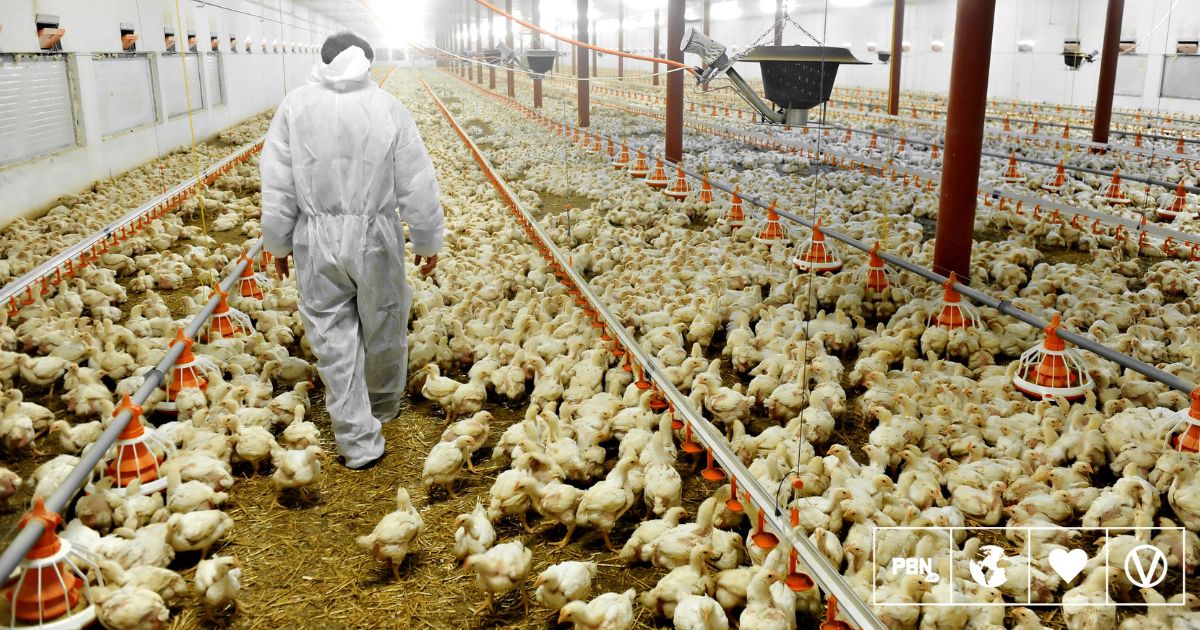
Norway, where around 70 million chickens are raised for food each year, is the first country ever to commit to 100 percent high-welfare birds. Animal welfare advocates welcomed the decision, describing it as a “historic moment.”
Nice first step, Vegan
I am mixed about this. On the one hand fast-growing birds have tons of health issues and help to make the production cheaper which allows the industry to stay larger. On the other hand if consumption and production levels stays constant, the total number of chickens killed will increase. Slower growing chickens have lower slaughter weights which means you need more of them. From a study looking at the US:
Maintaining this level of consumption entirely with a slower-growing breed would require a 44.6%–86.8% larger population of chickens and a 19.2%–27.2% higher annual slaughter rate, relative to the current demographics of primarily ‘Ross 308’ chickens that are slaughtered at a rate of 9.25 billion per year.
https://royalsocietypublishing.org/doi/full/10.1098/rsos.210478#d1e265
It’s about the suffering. These chickens have horrible lives. What’s the point of killing less chickens if they suffer horribly?
Better to kill more chickens that don’t suffer while they’re alive.
And better yet to eliminate factory farming altogether. But one step at a time.
It’s still more chickens who still very much suffer a lot, just a little less in one specific way. It is not accurate at all to say that they don’t suffer while they are alive along with suffering while being killed. It potentially worsens a lot of issue by increasing numbers. From the earlier article
Our results indicate that, if raised in CAFOs, a shift to slower-growing Rangers may increase crowding and related welfare concerns including increased footpad dermatitis [7], jostling, conflicts and potentially infection risk [14], and thus may translate to a decrease in aggregate welfare at scale. A shift to individual better-welfare chicken breeds aims to lessen bone, heart and disease issues in present Ross birds, but even in non-CAFO production systems, slower-growing breeds may still experience other negative welfare conditions such as emotional and physical stress, disease, predation, injury and premature mortality, as well as distressing transport and slaughter practices
Weakening the industry is valuable. Make chicken less competitive as food