In era of hundreds of GB game, to see someone make game less than 2 MB is very surprising. it’s like we going back to NES era where every game fit in one single cartridge, no update, no DLC, and no resources hogging, everything was smooth
This is more like a competition than anything, GameJams is an integral part of the indie games communities and something a fair share of developers likes doing.
It’s a way to try to come up with new concepts and get feedback on it. Often with one or more constraints/themes from the specific jam you’re participating in
I used to copy Apple II games, and they ran in 48k and often shared a floppy. Some even did vector graphics, which was kind of like deep black magic back then. The Amiga (which could actually do graphics properly) people will tell you similar stories.
I did hear a point about general game dev trends which is how optimisation wasn’t really a step in older games like it is now. When confined to the MB scale, or even just the finite scale of a single disc, the process wasn’t one of bloat and then half-arsed optimization but hyper optimised from the get go. I don’t think this shift is entirely the performance budget of modern games, but the multi-platform, limitless upper end, no disc limit design of modern games.


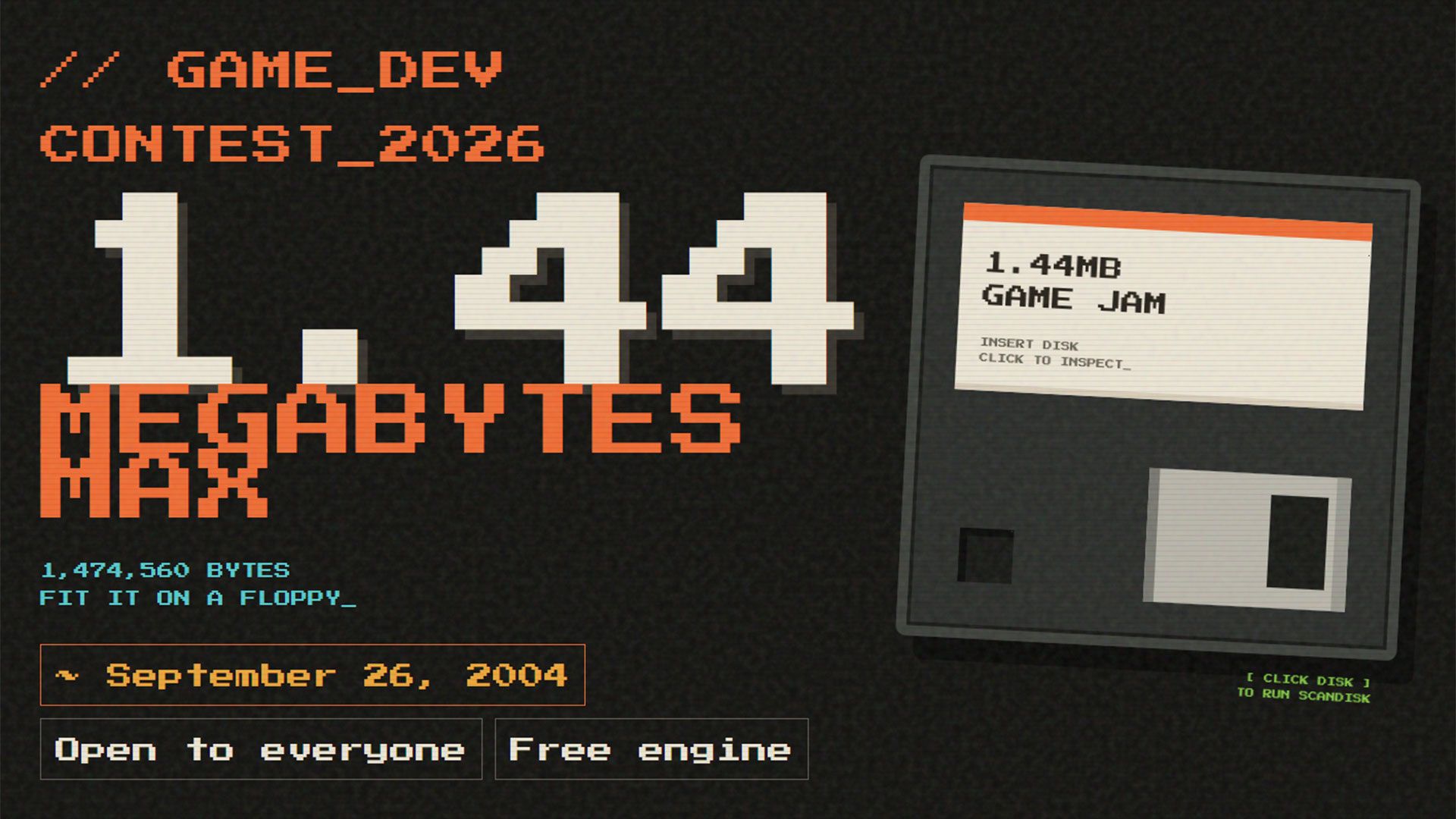
In era of hundreds of GB game, to see someone make game less than 2 MB is very surprising. it’s like we going back to NES era where every game fit in one single cartridge, no update, no DLC, and no resources hogging, everything was smooth
Many of the earlier SNES games were below 2 MB too, for example, Super Mario World is around half a MB, and A Link to the Past is around 1 MB.
I think the original Cave Story is between 5-6 MB.
can confirm i used to burn snes roms on floppy
Not less than 2MB, but Animal Well is only 33MB in total. That’s including any updates, etc.
That’s so insanely impressive to me. One of the best games this decade, and it’s way under 100 MB
This is more like a competition than anything, GameJams is an integral part of the indie games communities and something a fair share of developers likes doing.
It’s a way to try to come up with new concepts and get feedback on it. Often with one or more constraints/themes from the specific jam you’re participating in
I used to copy Apple II games, and they ran in 48k and often shared a floppy. Some even did vector graphics, which was kind of like deep black magic back then. The Amiga (which could actually do graphics properly) people will tell you similar stories.
I did hear a point about general game dev trends which is how optimisation wasn’t really a step in older games like it is now. When confined to the MB scale, or even just the finite scale of a single disc, the process wasn’t one of bloat and then half-arsed optimization but hyper optimised from the get go. I don’t think this shift is entirely the performance budget of modern games, but the multi-platform, limitless upper end, no disc limit design of modern games.