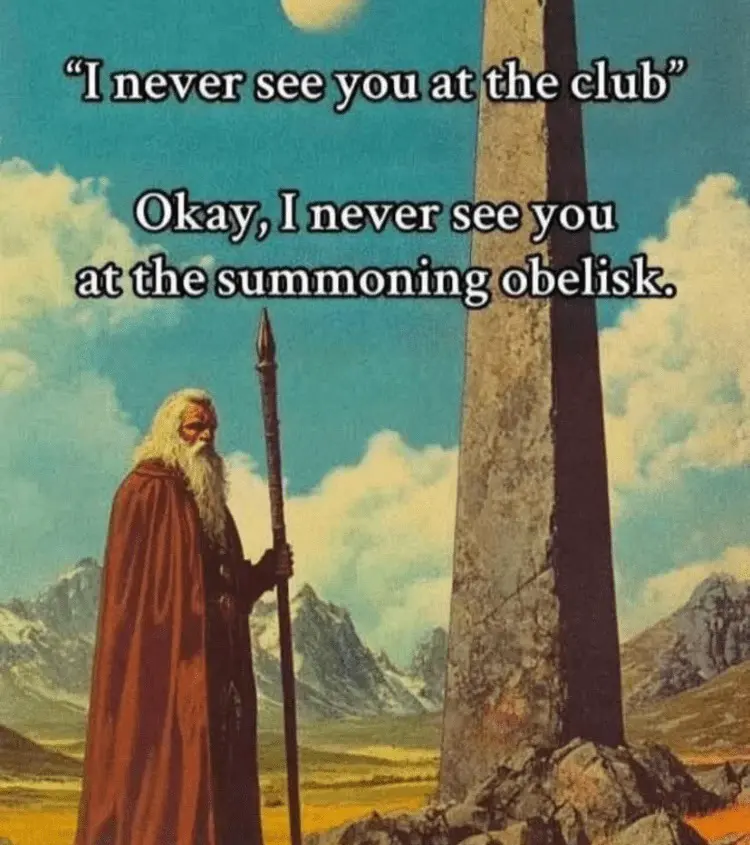
“Questioning the science” on your own is inadvisable unless you have the scientific knowledge, documentation, and equipment necessary to do your own research. Otherwise it’s best to trust the experts who’ve already undergone peer reviews to verify their findings.
The issue is many are science denialists and hide behind “question the science”
There’s more to “doing science” than “questioning science”.
Charlie Brown says “do your own research”, but not “and then submit to peer review”.
This is one of the big reasons I gave up religion, and became a “person of science”. All of the religious people told me to “just believe”, and to “stop questioning things”.
All the science people told me that I should distrust them, and look at the data and experiments myself. If I could come up with an experiment that disproves what they said, they would actually love to see it.
Lots of people in this very post saying “just believe,” unfortunately.
That is a true scientific spirit!
Please just vaccinate your children.
We do; this is a diet community, we’re not making statements about subjects outside that.
You can trust science. You can’t trust that science was done.
When science produces press releases it’s good to read the paper not the news. What they say it shows is so often untrue, the paper is clearer about how certain their result was
Yeahm.Press releases and news are for investors and things around the science, but not the science itself, I think. You have to read the paper as the reporting on it often distorts or exaggerate the findings for their own interests.
That’s a really concise way to put it.
Danke
Trust but verify.
Trust the experts
this sounds like something an anti-vaxxer would say.
You don’t question science by being a keyboard warrior though.
You do that by experimenting, gathering data, conceiving hypothesis, testing them, then performing peer reviews.
So unless you do that, you better listen to the experts. Because nobody can be an expert on everything.
You can do better than that by reading the studies and understanding what they found, instead of just taking them at their word in the conclusion.
Gentle warning - calling people keyboard warriors is not acceptable in this community.
you better listen to the experts.
Rarely is there a single group of experts with homogeneous opinions on the data. Theories need predictive value, that can be validated, to be meaningful to individuals.
If anyone is going to figure it out, it will be those experts though.
Not some random schmuck on the internet.
I agree with you in almost all science, but not in nutrition. Any random schmuck on the internet can read a paper behind a press release that says some food is super healthy to find that all it says is 300 in a thousand who ate that food were healthier while only 280 in the thousands that didn’t eat it were healthier and see that we have no idea whether that food is healthy to eat
We do get that pretty frequently though, climate change for example…and very few will listen, in fact a large portion of our species hates climate scientists and people who listen to them more than they hate rapists and murderers.
Indeed. But this is a diet community, you can be pretty sure it’s human diet research this is about
I mean it’s more complex than that. You should maintain a reasonable humility and give proportionally greater, but not absolute, trust to experts. I mean I love the message of always thinking for yourself but this is also how you get anti-vaxxers and flat-earthers. Questioning the science is valid if you can ask good questions. Some people can’t, some people can’t tell when they’re capable of that or not. Sometimes though. So its complicated.
Trust is earned. Why should I give greater trust to someone who hasn’t earned it by providing sufficient evidence for their claims? Science isn’t based on trust, but epistemological discipline.
@hakase@lemmy.zip Was the downvote because you don’t think trust is earned, or because you don’t think science is epistemological? In the former case, don’t worry, just trust me :)
Trust is earned
which is what the PhD, years of research and speciality brings. Steve on Facebook repetaibf your meme doesn’t have the same weight if credibility as Albert Enitstien
Paraphrasing Bertrand Russel, if you’re NOT an expert in the field and the majoriy of experts agree and you dont, you’re likely an idiot.
Lol, no, the downvote is because you’re full of shit, for multiple reasons.
So, since you called me out:
First, the downvote is because you definitely don’t read and question scientific publications for every single science-based belief you have. Nobody does, because that’s impossible. You very obviously defer to experts for the vast majority of your scientific beliefs - you’re only saying this because of the tiny few instances where you disagree with the consensus, which brings me to my second point:
The downvote is because this entire community is composed of essentially foodie anti-vaxxers. None of you are food scientists (because if you were you wouldn’t be here, of course) - you’ve “done your research” by reading shitty blogs that confirm your preconceived notions and nitpick irrelevant points in papers or cite fringe beliefs, and you’re regurgitating your garbage here to try to amass converts. And you’re acting like a neutral party and talking about “trust is earned”?? Give me a break.
It’s hard to believe, but I honestly think you may actually be more annoying than vegans. Even though they’re driven by religious zealotry, at least they’re correct about there being a climate crisis (even if they’re disingenuous about the role of animal agriculture in that crisis because of their beliefs).
You don’t even have that.
Hence the downvote.
Ah, so your downvote had nothing to do with anything I said. Got it. Fair warning then, rule 5.
My downvote was directly in response to what you said, because you’re talking about “earning trust” when you clearly don’t do that for 99% of what you know - only the tiny number of things that are convenient for this community.
Your comment is clearly false on its face, and therefore absolutely deserves a downvote, regardless of how messed up it is that this community exists in general.
Wait
…only the tiny number of things that are convenient for this community.
You’re saying xep is bad because they keep to the theme of the community they are posting and commenting to?
No, I’m saying that they’re cherry picking the things that have to “earn their trust”.
I’m saying that the vast majority of their knowledge that stems from scientific inquiry goes unquestioned, in spite of their claim that scientific consensus has to earn their trust.
It’s (conveniently) only the science that contradicts their (your?) pseudoscientific claims that deserve the scrutiny they claim everything has to earn.
Consider this: almost everything we care about is well proven. All the stuff we get from information technology is self-evidently effective.
What’s left? Nutrition, medicine
Medicine is tested in high quality double blind tests, that’s easy to trust (antivax people aren’t keeping up on science, they’re not reading papers)
Nutrition research is terrible. It is done with surveys and published in press releases as if tiny results were convincing. Its results when tested by stronger science are usually disproven, but most of what they publish isn’t controversial
This low quality science is the basis for public health messages about diet. It is the entire arsenal of papers used by the vegan community as if they were trump cards (and they don’t listen when tell them about the hazard ratio their paper shows is equivalent to noise). Every now and then we dissect a paper like that and it’s quite unpopular.
And what do you know this is a post about nutrition science.
You’re very quick to assume things about me considering that we’re internet strangers. On top of that, you’re very quick to assume things about the community as well.
You either think trust is earned, or you don’t. The statement stands on its own and what you’ve assumed about me and the community has nothing to do with the premise. They are exactly that, your assumptions.
Your opinions on the community are noted (they are wrong, btw) but I’m afraid that your demonstrated participation in this community has been very poor thus far. You’re likely not a good fit for it, and so you should block c/carnivore.
I never block communities, and I never censor my participation in them just because thin-skinned mods whine about their well-deserved downvotes.
You summoned me here (and have gotten yourself absolutely ratioed to hell and back in the process), so if you want me gone so bad, man up and do it yourself.
Because if I see any more BS like the disingenuous, sanctimonious tripe that earned your downvote in the first place, I’ll absolutely downvote your ass again and be more than happy to tell you why.
Request granted.
I’m pretty sure xep doesn’t have a problem with most of the science that affects them. You’re in a diet community, unsurprisingly this is about not trusting diet research unless when you read the paper you find out does prove what it says it does
Think of the studies that said eggs are bad, but now we know eggs are fine. Nutritional epidemiology in particular is hard to trust
We know eggs are fine because of further scientific studies.
Yes. They were declared dangerous after a nutritional epidemiology study. It was big enough that a controlled study was done and the egg eaters were in better health than the non egg eaters
Epidemiology has again found eggs are bad since then but it’s not newsworthy anymore. Epidemiology can’t control for how a thing was consumed - was the daily egg in the form of a bacon and egg McMuffin with whatever else that came with it, or was it a boiled egg?
They also often code takeaway as meat or processed meat, so a terrible takeaway diet is coded as meat, or if pizza as processed meat, and don’t ask for details, so they don’t know if burgers every day for the past 5 years means just meat with whatever whole food veg, or whether it is with 1 large serve of fries and a cup of sugar water
They have incredibly bad for predictive power
No, that’s not what science is about. Science basically is about providing evidence for your claims. If you doubt a scientific claim without evaluating the evidence and presenting your own evidence to the contrary, you have no credibility.
There’s even more nuance than that. What you describe here is a process that is susceptible to confirmation bias. Good science starts out assuming it is wrong about its claims and tries to prove itself wrong. It tries to find the simplest explanation that accounts for all of the evidence and counter evidence. If it can’t prove itself wrong, it still doesn’t assume it’s totally right and leaves room for better explanations or contradictory observations.
And what would you call the scenario where someone makes a claim with insufficient evidence?
There are plenty of scientific theories that are insufficiently backed by evidence. Yet they are valid theories because they best fit the available evidence, despite the gaps. As long as people are aware of this and honest about it, it’s still scientific. It only begins to get fishy if people try to sell some badly or not all all evidenced theory as truth. Unfortunately that is enough to become Health Secretary in certain countries these days.
A hypothesis.
Unless it already has been debunked.
What about when they’re a huge Christian organisation, and they also did a press release?
Bullshit.
Trust the process, question the result.
There are processes in human diet research that I don’t trust, notably Food Frequency Questionnaires (FFQs) that categorise people’s diets with 5 year snapshots (“how often did you eat each category over the past five years?”)
At best they make reasonable hypotheses but the press releases the people running them put out make out that they have found truth, that blueberries make you healthy or processed meat gives you cancer, but all they really found was the people who would buy and eat blueberries were healthier than those who didn’t (maybe they’re wealthier?), or that their category “processed meat” also included foods like pizza so if you group all the people who eat salami or lunch meat or pastrami or bacon or pizza every day did a little worse than those who didn’t
They produce hazard ratios - 1 means exactly like the other group, 4 means there’s probably an increased risk. 4 means 400% more incidence of whatever
Most parts of science don’t consider hazard ratios of less than 4 useful. Nutrition is happy to do a press release for HR=1.18 which is indistinguishable from noise
“Question everything!”
“Why?”
If your not getting the results predicted, try to replicate the science - apply the theory, create a experiment, if it doesn’t match the theory… now ‘Why?’
was joke
Trust the meme!