

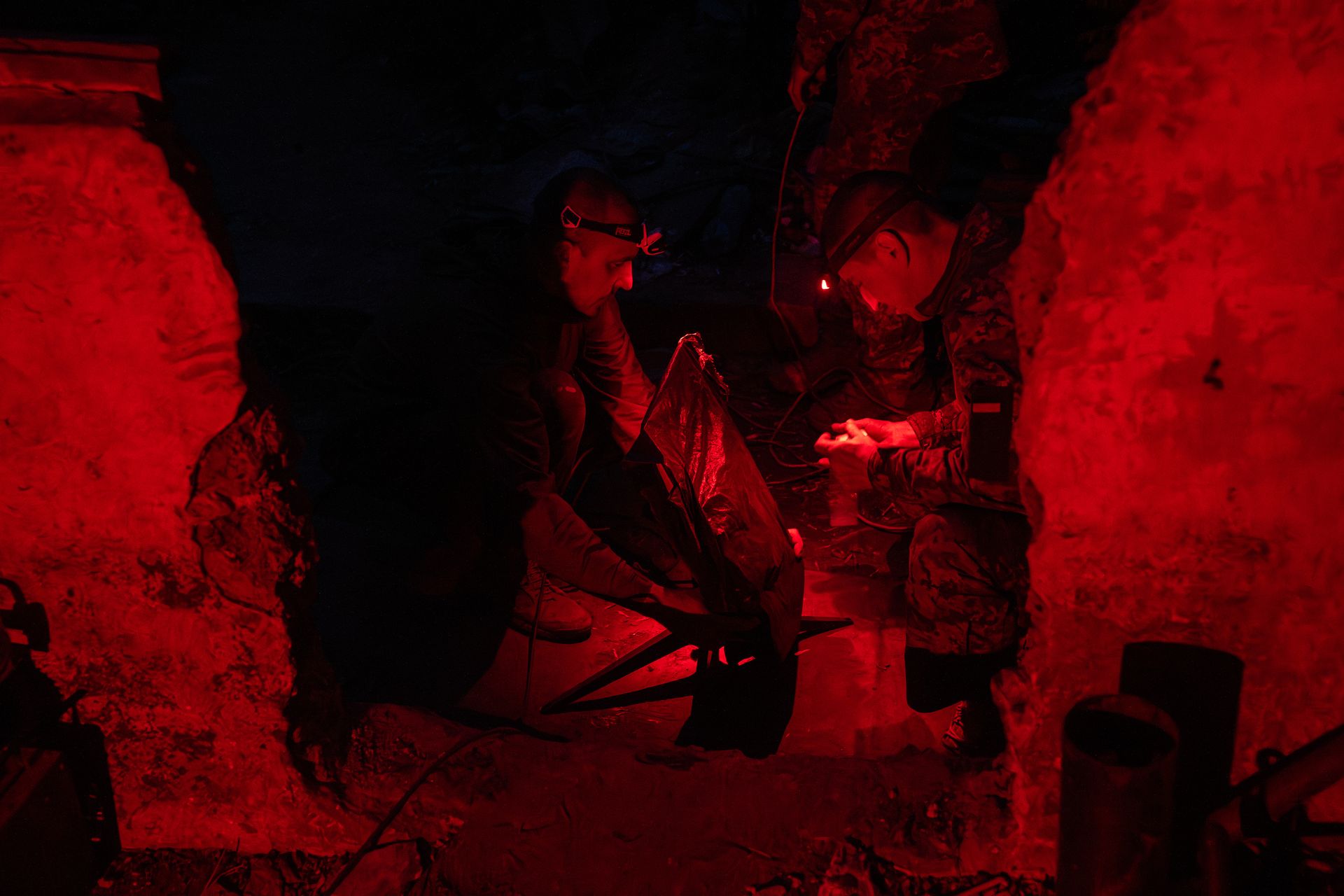
Ukraine’s Starlink access has been restricted without warning, severely disrupting “several” military missions, presidential adviser Serhii “Flash” Beskrestnov said on Oct. 14.
“I confirm that (Starlink owner) SpaceX implemented speed restrictions on Starlink terminals while in motion last night. Currently, the restriction applies to the StarShield ‘military service package’ and limits speed to 100 miles per hour (160 kilometers per hour),” he said in a post on social media.
Ukraine relies on Starlink for several military applications including operating its mid-strike campaign in Russian-occupied Ukraine, as well as interceptor drones that defend against Russia’s new jet-powered attack drones.
This mid-strike campaign has this year allowed Ukraine to strangle Russian logistics, hampering its ability to fight on the front lines.
…
“This complicates drone missions —specifically those involving interceptors and mid-range strike drones — and hampers capabilities for frontline logistics, reconnaissance, and signal relay,” the source added.
…
“The consequences are already being felt in the field. Since the start of the day alone, a drone unit operating within the 7th Corps’ area of responsibility in the Huliaipole sector has had to cancel a number of missions due to these connectivity issues,” the corps said.
“Obviously, this action cannot be a coincidence and is associated with the current political situation,” Beskrestnov said.
As reported by the Kyiv Independent on Oct. 12, U.S. President Donald Trump has threatened Ukraine with the withholding of intelligence and other assistance in a bid to protect Russian oil refineries.
…
The threats came after a confusing 48 hours during which U.S. President Donald Trump announced a controversial “deal” with Russian President Vladimir Putin to import Russian diesel, followed by repeated demands that Ukraine replace Volodymyr Zelensky as president, followed by Trump announcing a unilateral “energy ceasefire” between Russia and Ukraine, which blindsided both Moscow and Kyiv.
Ukraine has since refrained from attacking Russian oil refineries but Russia has continued its blitz on Ukraine’s energy infrastructure, most recently overnight on Oct. 14 when “several” power plants in Kyiv were hit. Trump has refused to accuse Russia of breaking the ceasefire.
How does this end? China will send a satellite constellation up there, Musk has one, Bezos wants one, Europe will have to send one, and so on.
Destroying the planet isn’t enough, I guess. The next step is to pollute the night sky.
Logisticaly it isn’t going to happen in the near term
Bezos and Europe don’t have the capacity to send and maintain the numbers of satellites in orbit to build their own satellite constellations. Sending them up on SpaceX rockets invites espionage and sabotage of the equipment. Blue Origin has its own troubles and is years away from supporting that tempo of launches.
ASTs has the tech to reduce the number of satellites but their options to send satellites into orbit are limited and they don’t want SpaceX near their tech. They used Blue Origin’s rocket and it was a disaster.
China might be a contender but they’ve only just started their reusable rocket program and likely can’t generate the number of launches for quite some time.
ASTs has manufacturing delay problems. They still might just be first mover when it comes to direct to device though, but as you mentioned they don’t have a lot of great choices to getting their sat. tech up into orbit…seems they have a lot of international interest though which will bode them well in the future, hopefully.
Oh don’t worry, those satellites are definitely going to help destroy the ozone layer. They’ve got both lanes covered.
Don’t worry about the ozone layer, between all those satellite constellations and Musk’s totally-going-to-happen data centers in space, we’ll have a Kessler Syndrome that will halt any launches.
How would they cause a kessler syndrome? (It probably won’t stop all launches anyway) Starlink sats and any similar constellation that provide internet connection need to be on pretty low orbit so they’ll fall pretty quickly.
It was mostly a flippant joke on my part. You are correct that Starlink has incredibly low orbits and they’ve actually gotten tighter. That said, it’s still getting crowded and already Starlink satellites are performing a thousand avoidance maneuvers on a daily basis. The problem will get worse with additional constellations, especially since not every launcher wants to coordinate and share satellite data. While most of the debris will stay in the same orbit or quickly deorbit, some of it can reach a higher orbit where it will stay longer and cause more serious issues outside of the constellations.
Aren’t orbital maneuvers and collision avoidance are mostly probablistic and with very generous margins? Obviously there are a lot of possible issues with one company deploying more satellites then whole world combined with very little oversight from controlling bodies. To be honest I’m not sure that there going to be a lot of massive constellations on low orbits, 2-3 more at most with 1000+ sats, managable untill they are going to be used as weapons, and then they are going down 🙃 with a lot of debris in all directions.