

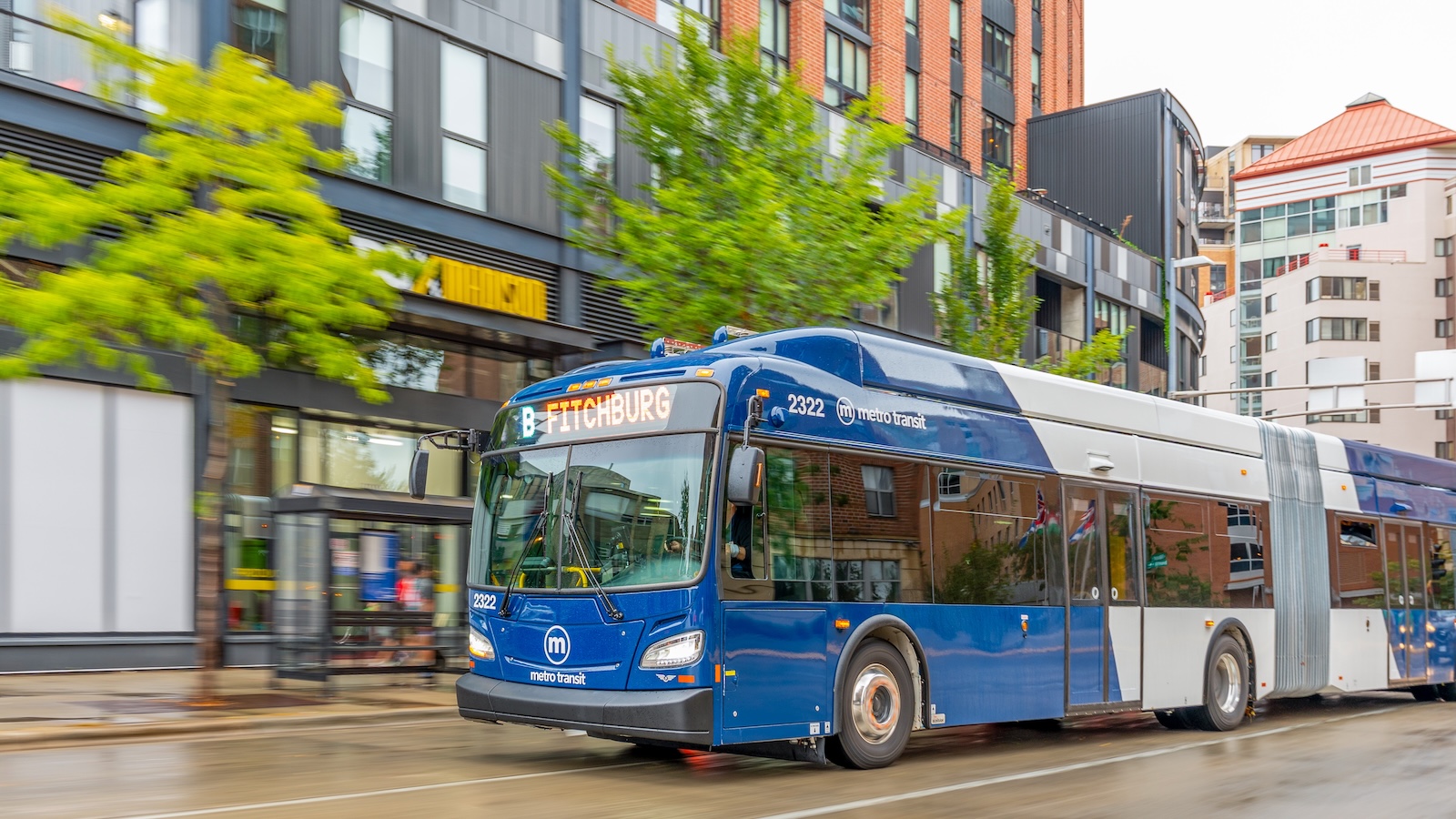
Just a few years ago, electric buses routinely faltered in cold conditions, reinforcing doubts about whether they could replace diesel and natural gas-burning fleets in northern cities. Now, with better batteries and strategically placed chargers, Madison is at the forefront of a small but growing number of cities testing whether those doubts still hold. Making the technology work through a long Midwestern winter could reshape how others approach electrification. Some 3.6 million commuters nationwide rely on buses to get around. With transportation accounting for roughly 28 percent of the nation’s greenhouse gas emissions, transit agencies are looking for alternatives to polluting machinery that creates a particular health risk around bus stops.
Not sure I agree with this. Many of those vehicles don’t even need to exist, so effort is better spent on eliminating them. Buses are among the few vehicles that actually provide public benefits greater than their costs, so it makes sense to invest in new technology to improve them.
And as you alluded to, the air pollution benefits can be substantial.
I think we’re saying the same thing with a different strategy.
Such to say, I’d prioritize eliminating all the non-passenger work vehicle passenger family vehicles than reduce bus fuel emissions. That might mean pumping out more “dirty” busses for an overall net positive in the short term.
Ah, I see. From a 10,000’ view this makes sense, but at least in my local political context, local government is relatively powerless to do much to reduce personal vehicle usage. But they do have total control over what buses are used. So I don’t see those changes as direct alternatives.
Changing from the personal car as the default means of travel is going to require a large, powerful political movement. It’s not something government leaders can do unilaterally. The backlash will be very intense. So I think it’s up to concerned and motivated members of the community to create a positive force for change that overwhelms that opposition.
I would personally argue changing modes of transit are very much a local leader problem. Since they decide land use policies, transportation priorities, and many other things that can improve or degrade the transportation options available to people.
I’m obviously biased with my own political reality, but a city council can do more for modal share than a federal decree. And it’s obviously not a zero sum game. We can replace fleets woth electric busses AND build bike lanes.
Improving or expanding the existing bus systems would be a better use of resources than converting existing systems to green energy.
A fair point. I think I largely agree. But in the US there are a lot of grants for electric vehicles. Most public agencies are totally paralyzed and can’t do anything new without federal funding. My suspicion is it’s easier to get money for shiny new buses than for a new line. Especially because capital upgrades are mostly a one time cost while a new line requires ongoing funding. Funding they largely don’t have.
When I talk to my transit agency about new lines they look at me like I’m crazy and explain that they’re fighting as hard as they can just to maintain existing service. But it’s totally possible or maybe even likely there is mismanagement at play there.
Which of those vehicles don’t even need to exist?
Most of the passenger vehicles. A good chunk of heavy trucking could be replaced with rail too.
I didn’t mean any category would be totally eliminated, just the numbers reduced substantially for some.
most unnecessarily huge passenger vehicles
“Light duty” trucks (or rather, 95% or so of them).