
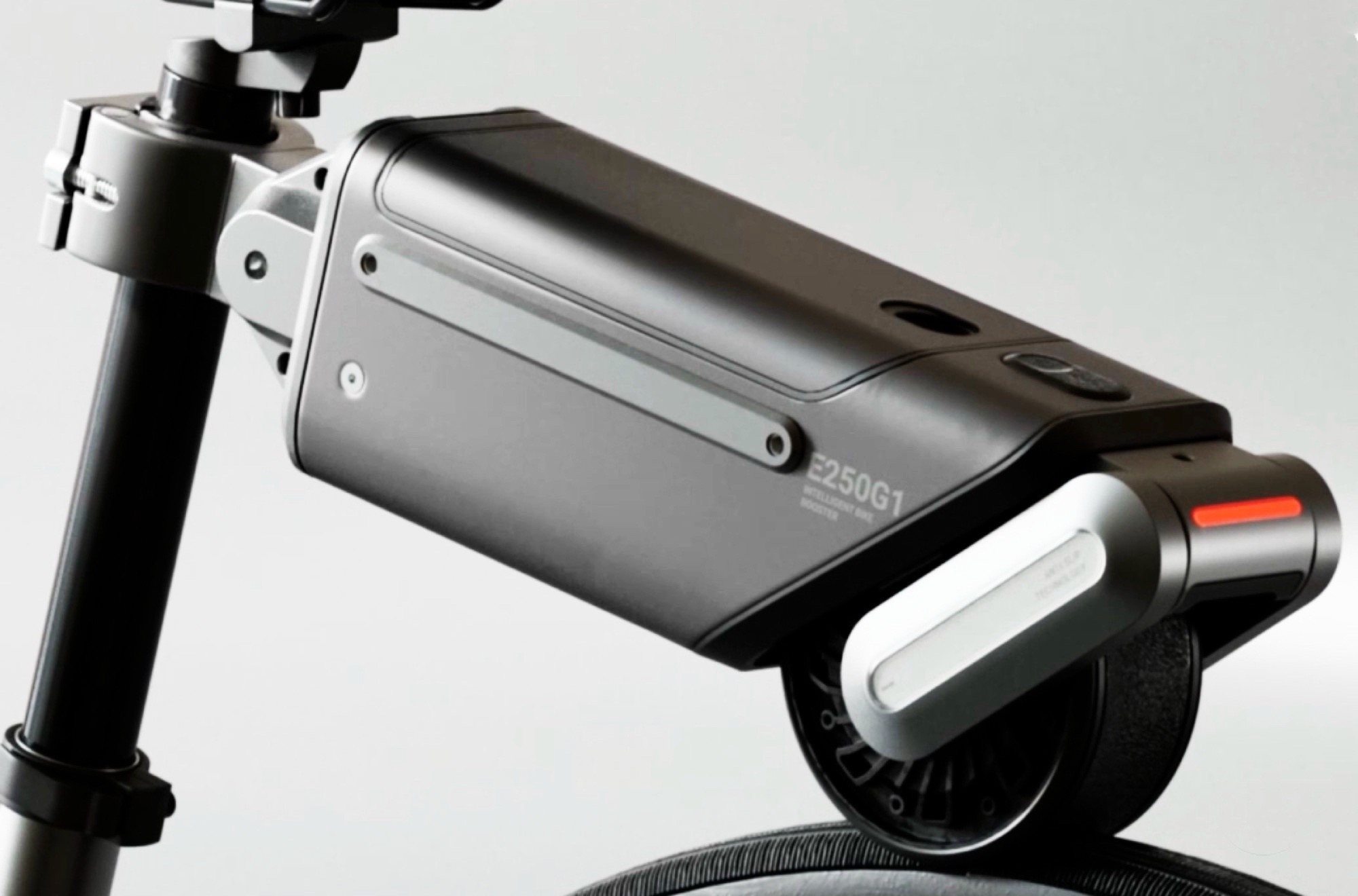
Excuse my elementary understanding of the forces involved, but wouldn’t this method cause the tire tread to wear out twice as fast?
Not sure exactly how fast it would wear, but it would definitely wear faster and there’s probably also a significant efficiency loss power-wise.
These are just generally not a great option compared to a hub motor retrofit IMO. Honestly I’m not even sure what the use case is unless you have some very obscure bottom bracket which can’t accept a hub motor.
Not an expert either, but I’m assuming the friction between this thing and the tire, is less than between the tire and road. The roughness of the contact may also play a role? It’s surely wear faster, but probably not twice as fast.
In any case, for people not using their bike because it’s not electrified, this may be the only reason the treads get any wear at all, which in my book is better.
I’ll start by saying that I’m usually not very plussed about attachments that drive an acoustic bicycle’s tires. Nevermind that they might not meet the rules in some jurisdictions (eg California) to qualify as a class 1/2/3 ebike, but also that they tend to give poorer performance than even the simplest hub motor ebike. This design also seems to not work if there’s a rear suspension, which is common in cheaper “bike shape objects” (BSO). But the whole point of this is to enable a BSO to become real transport, and I won’t knock on that idea. But this type of implementation doesn’t really seem all that great.
That said, there’s a different realm where this would be incredible and that’s with motor-assist for wheelchairs. From the thumbnail alone, the packaging of this motor is almost perfect for mounting behind and below a wheelchair, and presumably they already have some sort of control loop where it’ll cruise once you’re moving but slow down when you’re braking.
I know a few folks that have added motor assist to their wheelchairs and it’s been a large improvement in going farther than they would otherwise have; for this use, endurance and ease of charging are more important than speed. But the price point for existing medical-grade equipment is very high, at some $5000 USD.
If this product were introduced at even just $1000, it could sell like hotcakes to wheelchair users. And I’m 100% onboard with the idea of using electric mobility for everyone.
Easy removability could make something like this viable. If you could just take the motor off and charge it inside, it would solve some security concerns along with the logistics.