Even with a 100% tariff, BYD would still be the best deal. From what my friends who frequently travel in Canada say, the cars themselves are excellent too. With their first solid state battery products releasing in 2027, they’re poised to be what people thought Tesla was going to be 10 years ago while Tesla has mired itself in musky politics. The board needs to drop Elon as part of its plans to survive the next decade.
True, but kind of hilarious that you’re basically explaining why tariffs are used. Like, fuckery? Tariffs are absolutely vital. It’s when you have no fucking idea how they work a la MAGA that they get used as a weapon instead of a tool.
You don’t want BYD coming in tariff free exactly because it would collapse not just the domestic brands but also the entire economic infrastructure around them.
I’d feel more strongly at protecting national brands if they didn’t outsource and import 99% of the car. The only national brand that primarily manufactures everything in the us is Tesla, and it’s ran by an anti-union nazi.
Capitalism does not require universal free trade. That’s not viable under any system.
Edit:
capitalism/kăp′ĭ-tl-ĭz″əm/
noun
An economic system in which the means of production and distribution are privately or corporately owned and development occurs through the accumulation and reinvestment of profits gained in a free market.
An economic system based on predominantly private (individual or corporate) investment in and ownership of the means of production, distribution, and exchange of goods and wealth; contrasted with socialism or especially communism, in which the state has the predominant role in the economy.
Similar: capitalist economy
A socio-economic system based on private property rights, including the private ownership of resources or capital, with economic decisions made largely through the operation of a market unregulated by the state.
Capitalism assumes that everyone can compete and the best and cheapest product wins. Everything else are regulations we invented to keep capitalism in check, since its a pretty self destructive system.
Your own explanation of the word works against you.
A socio-economic system based on private property rights, including the private ownership of resources or capital, with economic decisions made largely through the operation of a market unregulated by the state.
What exactly counts as a market has changed over the last few centuries due to the industrialisation and globalisation, but by now with all the trade agreements and the ease of access, its fair to say that we have a global market.
Tariffs as a form to counter the heavy subsidization that China has within its car market could still be considered pure capitalism, but even then their cars would be 50% cheaper than EU/US models. Everything on top of that is blatant market manipulation done by countries or groups of interest (EU) to keep their domestic market relevant in a system that’s fundamentally designed to do the opposite.
Now that doesn’t exactly mean that these regulations are a bad thing, I don’t think we should give Chinese companies sole control over the global market just cause they have cheap labor. But it does show that capitalism is a failing system that needs increasingly more guardrails the bigger the market gets.
It would be fair to tarrif the imports to the extent of the Chinese manufacturing subsidy to level the playing field.
Beyond that, let us allow them in to put some pressure on domestic manufacturers to force production of products that we can actually afford to buy as an alternative to a 50K family wagon that has fewer features and is less efficient.
Our domestic vehicle choices are woefully inadequate to the times we live in and something needs to change. Affordability is not a pipe dream is what China is teaching us - don’t let that message pass you by as they build a strong economy around us.
So you agree that capitalism’s primary use is not to ensure the supply of everyone’s needs with the most effective usage of resources.
But rather: it’s about competition on an international level. And the former kingpins (so-called “US” and Europe) try to stop their inevitable decline.
Ekhm.
Do you know exactly how [rear earth] minerals are extracted (and how this industry became dominant in China over the rest of the world)? Other industries (with respective wages and employees’ rights)?
Just let’s be clear and specific about (methods of) oppression (if you insist on using this term exactly). The word is overused imo to drive specific agenda nowadays, unfortunately.
BYD being a cheap import because it is built where costs are lower is the same thing as US brands offshoring manufacturing. US brands get government favoritism through tax breaks and other benefits.
It would actually be pretty neat if BYD built factories in the US like the Japanese brands did to get around the import part. The costs would be higher of course, but still better than the current overpriced offerings from brands that have no real competition.


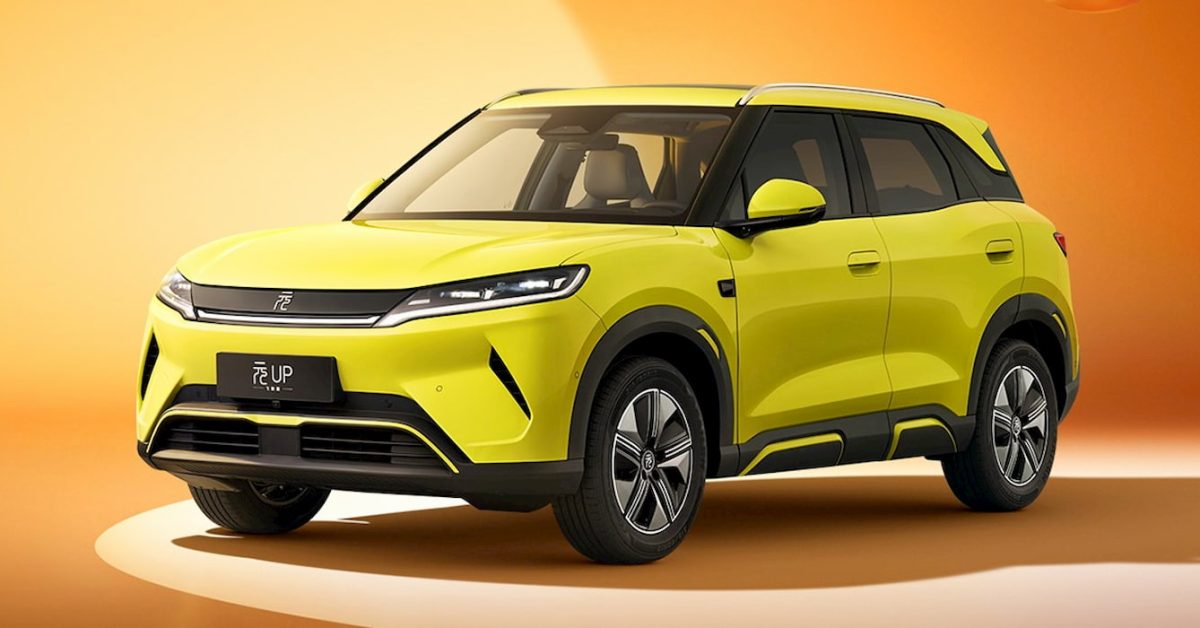
If BYD were available in the USA to consumers without tarrif fuckery, all domestic brands would ho belly up in a year
Even with a 100% tariff, BYD would still be the best deal. From what my friends who frequently travel in Canada say, the cars themselves are excellent too. With their first solid state battery products releasing in 2027, they’re poised to be what people thought Tesla was going to be 10 years ago while Tesla has mired itself in musky politics. The board needs to drop Elon as part of its plans to survive the next decade.
I’d expect team mango to shoot for 4-900% tariff
True, but kind of hilarious that you’re basically explaining why tariffs are used. Like, fuckery? Tariffs are absolutely vital. It’s when you have no fucking idea how they work a la MAGA that they get used as a weapon instead of a tool.
You don’t want BYD coming in tariff free exactly because it would collapse not just the domestic brands but also the entire economic infrastructure around them.
I’d feel more strongly at protecting national brands if they didn’t outsource and import 99% of the car. The only national brand that primarily manufactures everything in the us is Tesla, and it’s ran by an anti-union nazi.
You assume i dont want it to burn
I kind of expected that reply lol
Can’t really feel bad for companies who shipped away all their jobs only to get beat by the competition they trained.
so, not capitalism, because it can’t compete?
That’s not how that works.
Capitalism does not require universal free trade. That’s not viable under any system.
Edit:
capitalism/kăp′ĭ-tl-ĭz″əm/
noun
An economic system in which the means of production and distribution are privately or corporately owned and development occurs through the accumulation and reinvestment of profits gained in a free market.
An economic system based on predominantly private (individual or corporate) investment in and ownership of the means of production, distribution, and exchange of goods and wealth; contrasted with socialism or especially communism, in which the state has the predominant role in the economy. Similar: capitalist economy
A socio-economic system based on private property rights, including the private ownership of resources or capital, with economic decisions made largely through the operation of a market unregulated by the state.
Capitalism assumes that everyone can compete and the best and cheapest product wins. Everything else are regulations we invented to keep capitalism in check, since its a pretty self destructive system.
Within borders it does. Internationally, no.
People can downvote with their emotions all they want. Doesn’t make you right.
Your own explanation of the word works against you.
What exactly counts as a market has changed over the last few centuries due to the industrialisation and globalisation, but by now with all the trade agreements and the ease of access, its fair to say that we have a global market.
Tariffs as a form to counter the heavy subsidization that China has within its car market could still be considered pure capitalism, but even then their cars would be 50% cheaper than EU/US models. Everything on top of that is blatant market manipulation done by countries or groups of interest (EU) to keep their domestic market relevant in a system that’s fundamentally designed to do the opposite.
Now that doesn’t exactly mean that these regulations are a bad thing, I don’t think we should give Chinese companies sole control over the global market just cause they have cheap labor. But it does show that capitalism is a failing system that needs increasingly more guardrails the bigger the market gets.
It would be fair to tarrif the imports to the extent of the Chinese manufacturing subsidy to level the playing field.
Beyond that, let us allow them in to put some pressure on domestic manufacturers to force production of products that we can actually afford to buy as an alternative to a 50K family wagon that has fewer features and is less efficient.
Our domestic vehicle choices are woefully inadequate to the times we live in and something needs to change. Affordability is not a pipe dream is what China is teaching us - don’t let that message pass you by as they build a strong economy around us.
Agreed, that’s the best option
So you agree that capitalism’s primary use is not to ensure the supply of everyone’s needs with the most effective usage of resources.
But rather: it’s about competition on an international level. And the former kingpins (so-called “US” and Europe) try to stop their inevitable decline.
No, it is not about competition on an international level. It’s an economic system for a state, not an economic strategy
Umm, we’re in international economy. There’s no capitalist state that doesn’t do international trade.
And the states are in competition with one another. That’s why tarifs exist.
That’s correct. Not sure what your point is?
International economy means that there is a competition going on between the nations.
If Chinese companies sell more EVs, Germany’s economy suffers.
True or false: A capitalist nation can trade with a communist nation.
What’s your point?
This system of oppression needs to collapse.
Ekhm. Do you know exactly how [rear earth] minerals are extracted (and how this industry became dominant in China over the rest of the world)? Other industries (with respective wages and employees’ rights)?
Just let’s be clear and specific about (methods of) oppression (if you insist on using this term exactly). The word is overused imo to drive specific agenda nowadays, unfortunately.
BYD being a cheap import because it is built where costs are lower is the same thing as US brands offshoring manufacturing. US brands get government favoritism through tax breaks and other benefits.
It would actually be pretty neat if BYD built factories in the US like the Japanese brands did to get around the import part. The costs would be higher of course, but still better than the current overpriced offerings from brands that have no real competition.
I doubt it. People will eat old window caulk before giving up their V8 pickups.
Nobody cares about those folks, it’s the rest of us that want them.
They’ll be eating caulk just to keep affording the gas to run those V8s at this rate.