The actual thing they need to do in order to compete is in-source parts manufacturing in order to take advantage of economies of scale… Like the Chinese EV manufacturers do.
Basically, toss out the Chicago school of economics thinking and go back to their roots as an all-things manufacturer. Ideally, they’d innovate as part of that by adopting new technologies like 3D printing to bring costs down and accelerate improvements.
I don’t mean “3D printing for prototyping.” They already do that. I mean, 3D print the final part. If it works for fucking rockets going into space, it can work for cars too. Especially electric vehicles which are much simpler to make.
I mean, 3D print the final part. If it works for fucking rockets going into space, it can work for cars too.
3D printing doesn’t “work” for rockets in general. 3D printing works for specific rocket components (engine cooling channels) which are difficult to manufacture using traditional techniques like machining or casting. I can’t think of any components like this on cars.
Relativity Space did try to 3D print an entire rocket (including the tanks, LOL), but cancelled it after the first launch, switching to a design where only specific components will be 3D printed.
In the US at least, auto manufacturers have actually been on-shoring manufacturing for years. It is just that it is mostly automated factories.
Chinese manufacturers have a cost advantage because:
Chinese labor is cheap.
China’s large population and large institutions combined with their recent history as a labor intensive manufacturing hub means that they have some of the most dynamic manufacturing capabilities in the world. Essentially, they are incredibly rich in the soft skill of creating manufacturing processes.
The chinese government gambled on EVs early and it appears their gamble is paying off.
Yeah, 3d printing only makes economic sense if you’re not doing mass production. It involves a lot of compromises.
Also, OP argues that it’s better to be an “all-things manufacturer”. Most of the time that isn’t the most efficient way unless you have government assistance in some form. That might just be having patents or copyrights. BYD started as a battery company and has battery-related IP. Now they’re China’s leading company in patent filings, with over 13,000 of them.
Most of the time it’s more efficient to specialize in something and buy parts from other specialists.
The actual thing they need to do in order to compete is in-source parts manufacturing in order to take advantage of economies of scale… Like the Chinese EV manufacturers do.
That’s called vertical integration. Ford was the original pioneer of vertical integration in auto, but they lost their way.
Ideally, they’d innovate as part of that by adopting new technologies like 3D printing to bring costs down
Generally, 3D printing is cheaper for very small product runs, but ends up being much more expensive than traditional manufacturing at scale.
Setting up an injection molding machine, for example, is very expensive and takes more time than setting up a 3D printer … but once set up, it can crank out several parts per minute, while the 3D printer is taking hours for each print.


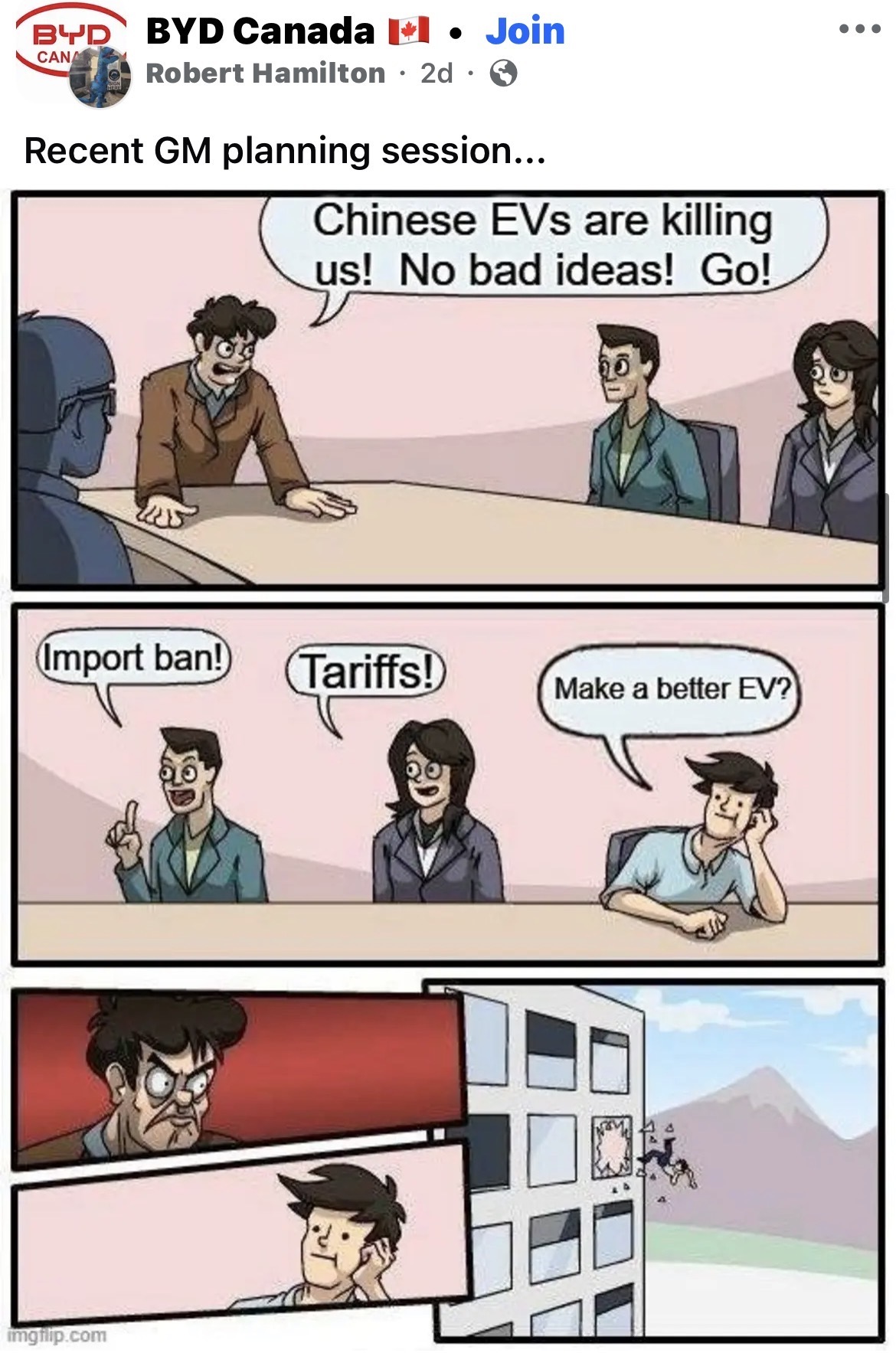
The actual thing they need to do in order to compete is in-source parts manufacturing in order to take advantage of economies of scale… Like the Chinese EV manufacturers do.
Basically, toss out the Chicago school of economics thinking and go back to their roots as an all-things manufacturer. Ideally, they’d innovate as part of that by adopting new technologies like 3D printing to bring costs down and accelerate improvements.
I don’t mean “3D printing for prototyping.” They already do that. I mean, 3D print the final part. If it works for fucking rockets going into space, it can work for cars too. Especially electric vehicles which are much simpler to make.
3D printing doesn’t “work” for rockets in general. 3D printing works for specific rocket components (engine cooling channels) which are difficult to manufacture using traditional techniques like machining or casting. I can’t think of any components like this on cars.
Relativity Space did try to 3D print an entire rocket (including the tanks, LOL), but cancelled it after the first launch, switching to a design where only specific components will be 3D printed.
In the US at least, auto manufacturers have actually been on-shoring manufacturing for years. It is just that it is mostly automated factories.
Chinese manufacturers have a cost advantage because:
If you think 3D printing is advantageous for economies of scale, I have a bridge to sell you.
Rockets are the complete opposite of mass manufacturing.
Yeah, 3d printing only makes economic sense if you’re not doing mass production. It involves a lot of compromises.
Also, OP argues that it’s better to be an “all-things manufacturer”. Most of the time that isn’t the most efficient way unless you have government assistance in some form. That might just be having patents or copyrights. BYD started as a battery company and has battery-related IP. Now they’re China’s leading company in patent filings, with over 13,000 of them.
Most of the time it’s more efficient to specialize in something and buy parts from other specialists.
idk shit about manufacturing, but can you do that at scale? I know my 3d printer is slow as fuck if I want it to make a good print.
That’s called vertical integration. Ford was the original pioneer of vertical integration in auto, but they lost their way.
You mean the original Nazi car?
Yep, that’s the one.
Also when you pay pennies on the dollar for labor it cuts costs for EVs.
Good thing they don’t use pennies or dollars
Generally, 3D printing is cheaper for very small product runs, but ends up being much more expensive than traditional manufacturing at scale.
Setting up an injection molding machine, for example, is very expensive and takes more time than setting up a 3D printer … but once set up, it can crank out several parts per minute, while the 3D printer is taking hours for each print.