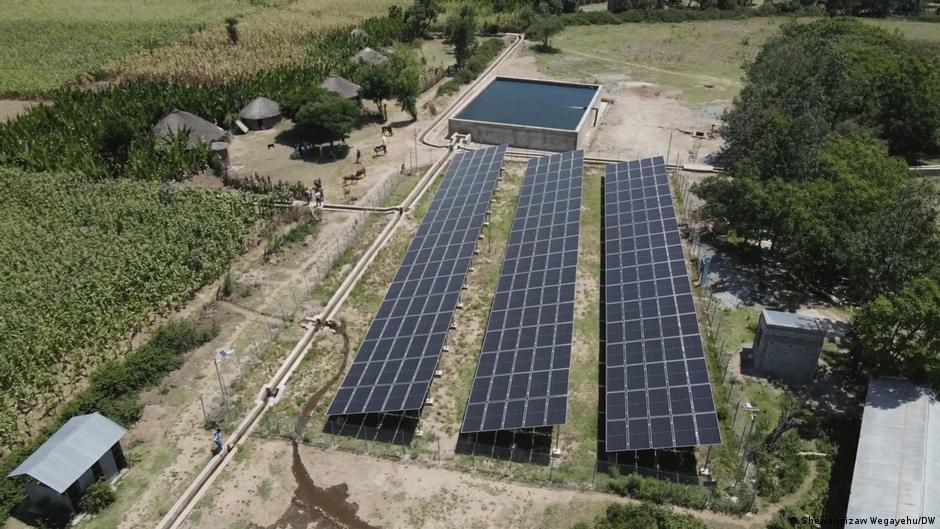
Renewable electricity is cheaper than ever. While the West got rich on coal and oil, some of the world's poorest countries are banking on solar, wind and water instead.
Doubling the budget is doubly the monthly electric bill. An EV getting a free monthly fuel bill 10 months of the year, is also a winter resilience device to charge the home with a trip to commercial charger. Majority of low income countries, topic, are concentrated around equator and lower seasonal variation. Rainy season in summer often means more winter than summer production.
Whoops. I got it wrong, sorry. If we follow Victron’s recommendations (4.8 kWh backup for 1.5 kWp generation) than for 6 kWp the LiIon backup (AC-coupled) would be pretty exactly 20 kWh. So your numbers are perfectly balanced.
The problem with just scaling up is that in winter months I can easily see 1/20th to 1/40th of PV nameplate during daytime, and such conditions can persist for more than a month. So without the grid as a backup the only option is diesel generation backup, or going entirely without any major power drain.
For low-consumer countries in the tropics the equation is much easier, since they’re consuming less than Westerners in general.
A model for Canada, does require enough solar for just 1 hour total sun to meet electricity needs (for winter). Backup heating necessary, but hydronic and heat pump (reversible heat/AC split units per room) is good use of fall solar to charge up a hot water reservoir that also gets recharged on sunny winter days. An EV that can charge the home counts as a backup heat source. This can mean much higher solar production for 9-10 months than you can use, but also means profitable bitcoin mining or GPU rental for that period. And/or free EV charging, hottub/pool heating, or other energy sinks that become free, off grid.
Canada/Ontario has corrupt electricity system, with $50/month flat fee. So a $50-$100/month equivalent (5x above investment) off grid cost is a better energy opportunity/alternative especially including vehicle fuel savings, but also in new construction heating system cost savings. A fireplace or woodstove may be an arguable quality of life improvement, instead of just a heating appliance.
If I look at my DIY 2 kWp PV output right now (about noon), it’s pretty much exactly 100 W. I’m going to double that this month, but it’s still only 200 W then under such conditions. It’s just not cost effective to overbuild that (physically, it’s not even possible for me) to cover an average 24 h period during the darker time of the year. I’m lucky that my meter is old enough to be able run backwards, otherwise I’d have to invest a few kEUR into a battery backup, which still be no bueno for the winter months. Only hydrogen storage can load level seasonally, and that’s entry level a 100 kEUR spend, and bleeding edge technology.
I heat with locally sourced (why, last year was mostly from the own garden, and for the next year a neighbor just felled a tree, otherwise it’s from a local forest close enough to walk to) so that’s not an issue.
I’m hesitating into investing into a split AC, though the heat spells are starting to be serious trouble. EV is right out of budget. In order to use the overcapacity from the future 4 kWp I’m thinking about running a local LLM.


Doubling the budget is doubly the monthly electric bill. An EV getting a free monthly fuel bill 10 months of the year, is also a winter resilience device to charge the home with a trip to commercial charger. Majority of low income countries, topic, are concentrated around equator and lower seasonal variation. Rainy season in summer often means more winter than summer production.
Whoops. I got it wrong, sorry. If we follow Victron’s recommendations (4.8 kWh backup for 1.5 kWp generation) than for 6 kWp the LiIon backup (AC-coupled) would be pretty exactly 20 kWh. So your numbers are perfectly balanced.
The problem with just scaling up is that in winter months I can easily see 1/20th to 1/40th of PV nameplate during daytime, and such conditions can persist for more than a month. So without the grid as a backup the only option is diesel generation backup, or going entirely without any major power drain.
For low-consumer countries in the tropics the equation is much easier, since they’re consuming less than Westerners in general.
A model for Canada, does require enough solar for just 1 hour total sun to meet electricity needs (for winter). Backup heating necessary, but hydronic and heat pump (reversible heat/AC split units per room) is good use of fall solar to charge up a hot water reservoir that also gets recharged on sunny winter days. An EV that can charge the home counts as a backup heat source. This can mean much higher solar production for 9-10 months than you can use, but also means profitable bitcoin mining or GPU rental for that period. And/or free EV charging, hottub/pool heating, or other energy sinks that become free, off grid.
Canada/Ontario has corrupt electricity system, with $50/month flat fee. So a $50-$100/month equivalent (5x above investment) off grid cost is a better energy opportunity/alternative especially including vehicle fuel savings, but also in new construction heating system cost savings. A fireplace or woodstove may be an arguable quality of life improvement, instead of just a heating appliance.
If I look at my DIY 2 kWp PV output right now (about noon), it’s pretty much exactly 100 W. I’m going to double that this month, but it’s still only 200 W then under such conditions. It’s just not cost effective to overbuild that (physically, it’s not even possible for me) to cover an average 24 h period during the darker time of the year. I’m lucky that my meter is old enough to be able run backwards, otherwise I’d have to invest a few kEUR into a battery backup, which still be no bueno for the winter months. Only hydrogen storage can load level seasonally, and that’s entry level a 100 kEUR spend, and bleeding edge technology.
I heat with locally sourced (why, last year was mostly from the own garden, and for the next year a neighbor just felled a tree, otherwise it’s from a local forest close enough to walk to) so that’s not an issue.
I’m hesitating into investing into a split AC, though the heat spells are starting to be serious trouble. EV is right out of budget. In order to use the overcapacity from the future 4 kWp I’m thinking about running a local LLM.
First world problems, I know.