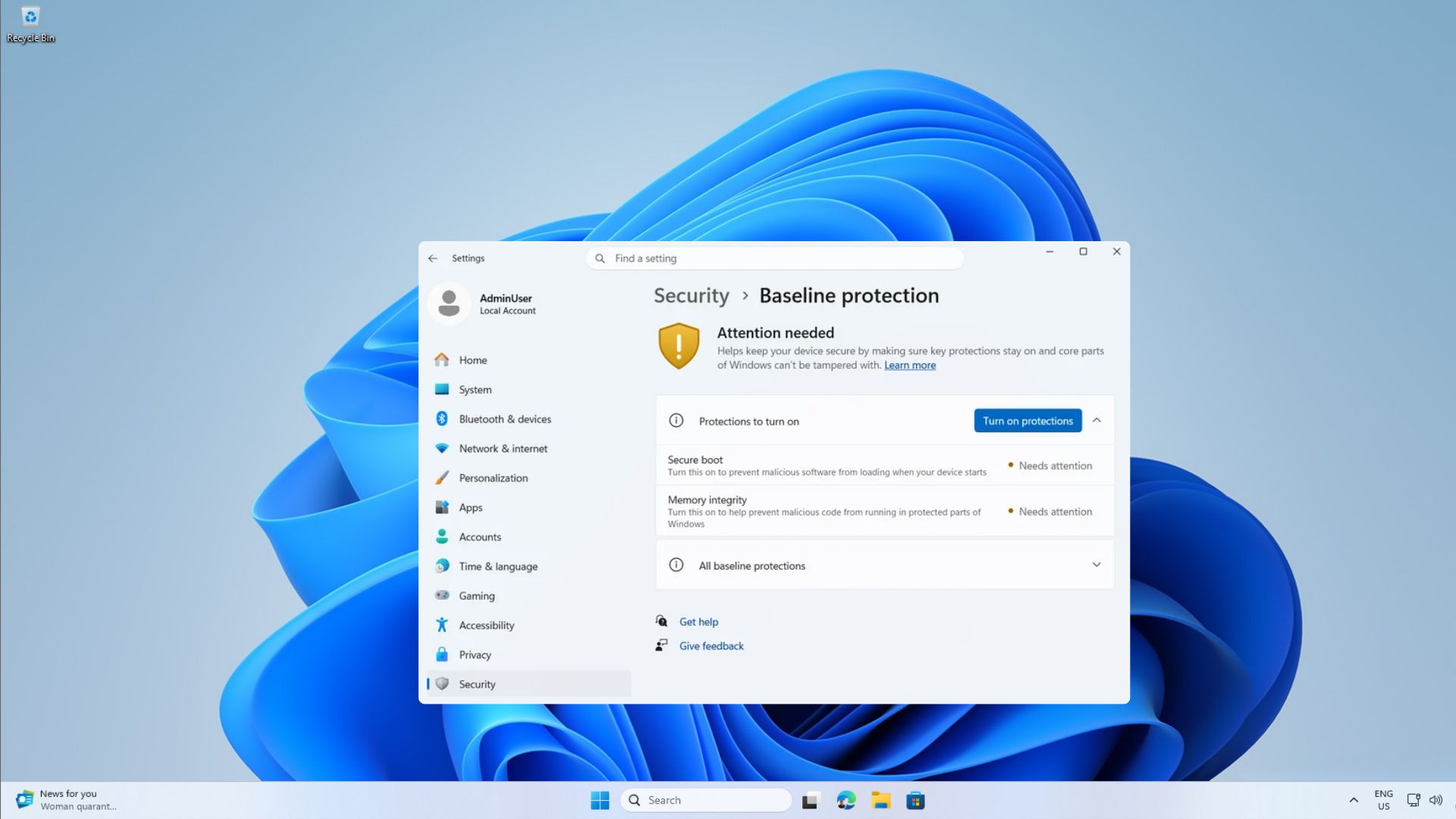
So, MS is about to lock down Windows like Google is locking down Android, and I worry this could also hit Linux if Windows apps start refusing to run in WINE because of not passing the new integrity checks like some Android apps refuse to run in GrapheneOS or LineageOS because they don’t pass Play Integrity.
This could be the beginning of the end of the PC as an open platform if that’s the case.
So I’ll be playing my old untainted versions of WarCraft III, SW:EaW, SW:XWA, IL2, and whatever else I’ll be able to remember, but for real I mostly don’t play games anymore.
This could go beyond games since Adobe wants it too.
Lol no we’ll just make new software to break the locks like we always do. I see this as more of a reason for the PC to be an open platform. If the corporations wanna close the door on themselves, I hope they lock it and don’t come back out. We’ll be making some cool shit on our own and hacking theirs if we want to and there isn’t a damn thing they can do about it.
I admire your optimism, but I’d suggest you take a peek at the concept of attestation.
In a nutshell, starting with Windows 11, all the pieces are in place for microsoft to turn Windows into the walled garden. It’s the same concept used on iPhones and is being applied to Android.
The simple explanation of attestation is: it’s possible for any application to validate (via cryptographic signatures) that the application itself, the operating system (re: Windows), and the hardware are all not modified.
The linchpin is baked within the hardware of your computer as there are some public/private keys (TPM). These private keys will never be exposed and if they are, the OS can simply invalidate them during the next OS Update. The public key can be used by the OS and application to validate that “everything is fine”.
Tools like WINE and even virtual machines will never get a legitimate TPM key. So they will always fail their attestation checks. (Just like your banking app not running on your rooted or custom android firmware)
That said, at the moment Microsoft has decades of backwards compatibility shovelled into Windows, which they’re not going to simple drop… and I assume that’s going to make full enforcement of attestation difficult.
But it’s not if Microsoft will do it, it’s when and this will be a slow boil as older applications and APIs are depreciated in favor of attestation enforceable replacements.
tl;dr The OPs concerns are legitimate.
So you’re saying we will no longer be able create and run open source software / hardware, turn off / remove TPM, change operating systems to linux or use existing and future DRM removal tools?
So you’re saying we will no longer be able create and run open source software / hardware
That is exactly what google is doing with Android in 42 days.
…turn off / remove TPM
You can disable TPM, but it would be similar to me installing a custom android ROM on my phone.
My bank app will know my phone has been modified and that app can disable itself.
It’s currently the case with Windows 11. You must have TPM enabled to install it. There are ways to circumvent this, but you lose the ability to get windows updates because the attestation/TPM check fails.
…change operating systems to linux
Linux will always be an option and running open source apps on it will always be an option.
… but… concepts like using attestation for age verification is gaining traction.
This mean you won’t be able to access certain websites unless you pass the attestation check, which means your (Linux) device must conform to whatever specification the company that’s handling the age check. I don’t know what those specifications will be, but I think it’s safe to assume custom compiled kernels will not be allowed (meaning you’ll be limited to commercial vendors Ubuntu/Red Hat/etc) and unsigned kernel modules will not be allowed either (see Kernel Tainting).
Yes, today age attestation is being pitched to “protect the children from porn”. Tomorrow, it’ll be your bank because “your security is important to them”. Then it will be Amazon and just about any other website because they simply want a 100% reliable way to track you as an individual (“think of the unblockable targeted ads!” /s)
…or use existing and future DRM removal tools?
Microsoft (just like google is today) can allow/deny you to
installsideload “unsafe applications” like your existing DRM removal tools.In the future, however, DRM (as a dedicated mechanism to protect content, thus having dedicated tools to remove it) won’t actually need to exist.
For you to get any copyrighted content, you’ll need to pass the attestation check, which means that your OS (windows/Linux) must be in a “known state” (ie: free of DRM removal tools, capture cards, sniffers, etc). So effectively your device will be enforcing the digital rights/ownership.
This also means software like Denuvo (and their negative impact on the performance of games) will be obsolete. …which is really the only ray of sunshine in this whole story.
edit: a word
Yeah - and there are so many companies who want remote attestation for their programs. All those fuckers who are currently showing DRM into our faces or always-on copyprotections will use that if available.
I recently has my work passkey revoked by Microsoft because “it didn’t meet the Administrators security requirements”, as they now require the passkey is stored only on the device via attestation (not in the cloud).
This guy called it.
Meanwhile, I’ll just go back to passwords.
They’re already making some great alternatives to big tech SaaS platforms. We’ll just need more of this to go with our OSes.
hell yeah
Bray says, “The platform reports the state; you own the policy.”
Nice to see microsoft is starting to replace their higher-ups with LLMs.
I like having the games but if it becomes impossible then so be it. I was using Linux way before wine was particularly useful, proton wasn’t even a thought yet. It doesn’t really matter.
There’s more older games than anyone will be able to play in their lifetime that won’t be effected by this.
And even if there wasn’t, we can find something else to do instead of contribute to madness just to play games. I love games too, but at some point enough is enough. It’s like no amount of shittiness will convince people to experience a bit of inconvenience. There are way too many people on Facebook funding pedophile fascists with all these clicks and the same with folks still on Amazon. Literally raping and murdering a lot of children is not enough for people to experience a bit of inconvenience.
Fuck Microslop. Everyone needs to stop.
I can’t imagine game developers would opt to alienate more players outside of games that already do that with requiring kernel anti-cheat and blocking Linux outside of the upcoming eac2 which would already require the same checks and more.
I am a little concerned that I won’t be able to play Diablo 4 anymore through battlenet launcher ran through heroic, but that’s the only application I can think of that I’d lose
Yeah also at this point it’s unlikely Linux would just lose all gaming, especially with things like the steam deck.
Worst case is we use qemu with that new gpu sharing thing and just run windows like a container. 🤷
Never have been able to get that to work. Always get the error that the module is already in use. On any vm manager. Tried boxes, vmcurator, virt-manager… always same problem of not being able to GPU passthrough or GPU acceleration
For pass through you have to tell the os to not load the card on boot, if you haven’t done that before arch has a detailed guide or you’d want to google it for your specific distribution (it is not hard, but does require some reading. Arch manual here )
So my understanding is if loaded on boot, it’s tied to the kernel space and otherwise loaded in user space allowing it to be passed to the vm? Will actually read that link later when I have time. Thank you for the information ❤️
Basically yes. Once the gpu is attached on boot you can’t pass it through without detaching it. There’s a way to do that in the link, but I’ve always disabled loading it on boot as that’s cleaner if you have 2 gpus available. I’ve done pass through on multiple Linux distros and currently have it on a FreeBSD machine with an Nvidia card currently. Feel free to dm if you’d like
I don’t think it’s a finished product yet. It’ll be pretty awesome when it is though.
Whoa, there, Adobe. Save your energy. I already had more than enough reasons not to use your products.
I don’t understand. If it’s just a flag for apps to check, can’t WINE just spoof it if the user wants?
Also… I have secure boot enabled, and I think that whole list enabled, on my dual boot Linux rig. Works fine.
And if you don’t enable secure boot, Windows stops getting feature updates, which eventually stops security updates, so you’re already kinda screwed without it anyway.
In other words, this headline feels like a nothing burger.
Windows 11 basically requires secure boot already, and if you already have it off, you don’t need it… unless you are like me and discover Windows literally will not update without it.
That’s pretty doomery. It’s a security check, is secure boot enabled, is this enabled. They’re kernel flags at most. If individual apps refuse to run, we’ll get mad then at those individual apps if Wine can’t figure out a way around it.
It’s not a security check; it’s a lock-in mechanism, just like Safetynet/Play Integrity.
Microsoft has been wanting to do this sort of thing for decades.
The problem is that these apps likely will work on Linux … If your system complies. It’s part of the embrace, extend, extinguish which may have mutated over the years but never left us. Of course you’ll be able to play your anti-cheat games on Linux - if your system meets the ever rising Microsoft established baseline, that is.
Why would Wine be “on board”? They can implement what features they like and abstain from the rest.
That’s my thought, wine isn’t Windows, its a whiteroomed application right? Not a recompiled of windows source.
Yup. If the Wine team answered to Microsoft in any way, the project would have been strangled in the crib.
There’s going to be ways to disable this. Also…Microsoft Defender is bypassed by nearly every major malware going around right now, even if you use configure defender on the “MAX” configuration
But how many games do you install from Microsoft. They’ll attempt it as that’s what a company does.