No you don’t understand… I’ve spent the last 30 years investing in increasingly awful software companies to create “industry standards” and leaving these companies behind would require me to change and learn!!!
So many issues with the world boils down to that last part, people refusing to change and learn. I never understood it, I’ve always loved change and learning. I’ve seen so many people go from having that same openness to only caring about keeping everything the same and never learning, it’s really disturbing. Some are like that from a very early age, others fall into it at any other part of their lives and it’s never a good thing IMO.
For me, I’ve got a million interests. I could change and learn this one thing, but that would take time away from learning about other, more personally interesting things.
I talked with the women i’m working with where we print our price lists about changing from adobe to something else and she told me it would be a bad idea since it would make both of our work much more buggy and time consuming with more chances of the end result being worse. So i’ll keep using indesing and the adobe suite for now but i did switch from sketchup to blender for 3D modeling and it’s a bit challenging and more messy then i’m used to but i get better rendering results from what i tried so far.
If your system uses systemd, it has an etc/machine-id, which is used for a lot of different things. And changing it will break a lot of stuff, probably until you reboot. I guess you could write something to randomly shuffle it every time you reboot? But it is the go-to way for lots of programs (including browsers) to identify themselves. Which means (unless you have done the work to scramble your machine ID) you can be tracked on Linux as well.
The difference is that Linux isn’t sending telemetry to some central entity associating that ID to an IP.
Microsoft’s records showed that at that exact same minute, a Windows device carrying GDID g:6755467234350028 had visited the ngrok signup page. Three hours later, the same GDID visited the retailer’s own website, through the same Tzulo proxy address used to set up the ngrok account.
This article is super vague about this as well. How does Microsoft not only have the GDID->IP link, but they have Web history as well? Are they just exposing all this through advertising telemetry?
Fucking gross. And if you know of anything on Linux exposing/transmitting the machine-id, please do let everyone know because nothing should. Anything that does should be considered malware.
This article is super vague about this as well. How does Microsoft not only have the GDID->IP link, but they have Web history as well? Are they just exposing all this through advertising telemetry?
My interpretation was that they had an IP that they suspected was the perp’s home network, and subpoena’d some major platforms to confirm beyond a shadow of a doubt. Given the perp’s sloppiness in using the same machine for both personal and illicit computing activities, they could even have some network traffic in the capture to indicate which platforms they should subpoena
Or if we want to be more conspiracy-minded, maybe they installed a trojan on his computer and this is the parallel evidence trail that law enforcement created so they don’t have to admit to hacking the hackers
i think i remember hearing the dbus machine-id being read by google chrome on linux. it could be used for privacy violation with proprietary software, though i personally consider linux machines with chrome or equivalent software installed compromised.
I should have clarified, but yes it’s the windows GPU drivers. Though even on Linux, it’s hard to know what the proprietary GPU drivers do, but from what I read they don’t collect telemetry by default. Luckily Nvidia is developing official open source drivers now so we won’t have to worry about these things.
Also note that on Windows, it’s fairly annoying to disable all telemetry. It’s not just an option in the installer. You have to use unofficial third party tools.
Upvoting both comments for awareness, since Linux is the first of a multi-step process, not a privacy panacea.
But we must be clear that in both theory and practice there’s little comparison between systemd and modern Windows machine-user association.
Someone using Windows regularly has a gaping wound, is actively bleeding out. Switching to Linux is just a tourniquet, but every other treatment is at best no-effect until that tourniquet is applied.
Also as a life long programmer, I have this feeling it is possible to just go in and make some changes so I can have the system just make shit up about the TPM while indeed also doing the equivalent of having system-d decide to respond with random bullshit.
Don’t even need to be a programmer, just find a community of them that you trust that distribute their own “fixes”.
Definitely not doing that with anything else because its both hidden in compilation and buried like herpes across multiple components. Probably/hopefully not directly related but I really want to know what they changed to break the clipboard service.
Adjacent comment. I’ve found working in a true posix environment is drastically better than the oddities I dealt with Win32. One annoyance is Microsoft has never been able to implement fork().
Though i never messed with x11 as I was never motivated to see what it was like under the figurative hood.
Sorry, switched contexts there. Microsoft broke their clipboard service recently which makes me think they added “telemetry” collecting logic somewhere in there.
Oh right, I misread. And yeah not sure (my win32 repro targets have all been locked for a while) but with all the facepalm regressions I’ve read about lately it really could be anything.
From my experience, the number one culprit of legacy code breaking is someone asking if anyone knows how it works. Second most common culprit is someone making a “quick patch” to legacy code.
Yeah, motherboard-level tracking is scary because even the OS won’t be able to detect it. The truly paranoid people (and security researchers) go as far as desoldering chips to ensure nothing phones home.
I wouldn’t call overhauling your entire operating system, including finding alternatives to software you use daily, making sure your hardware is compatible and relearning your entire work method as an “easy trick”.
In any other context I’d agree with you, but hacking is the one context where you really do want to do things the hard way. Use ephemeral VMs with passwords only saved in your head, have a dedicated machine for your illegal activities to help isolate your real identity from your hacking.
Honestly even if you’re just doing HackTheBox and similar best practice is to spin up a Kali VM and only use that VM for the activity since you’re literally connecting to a network with a bunch of hackers, even though what you’re doing is entirely above the board


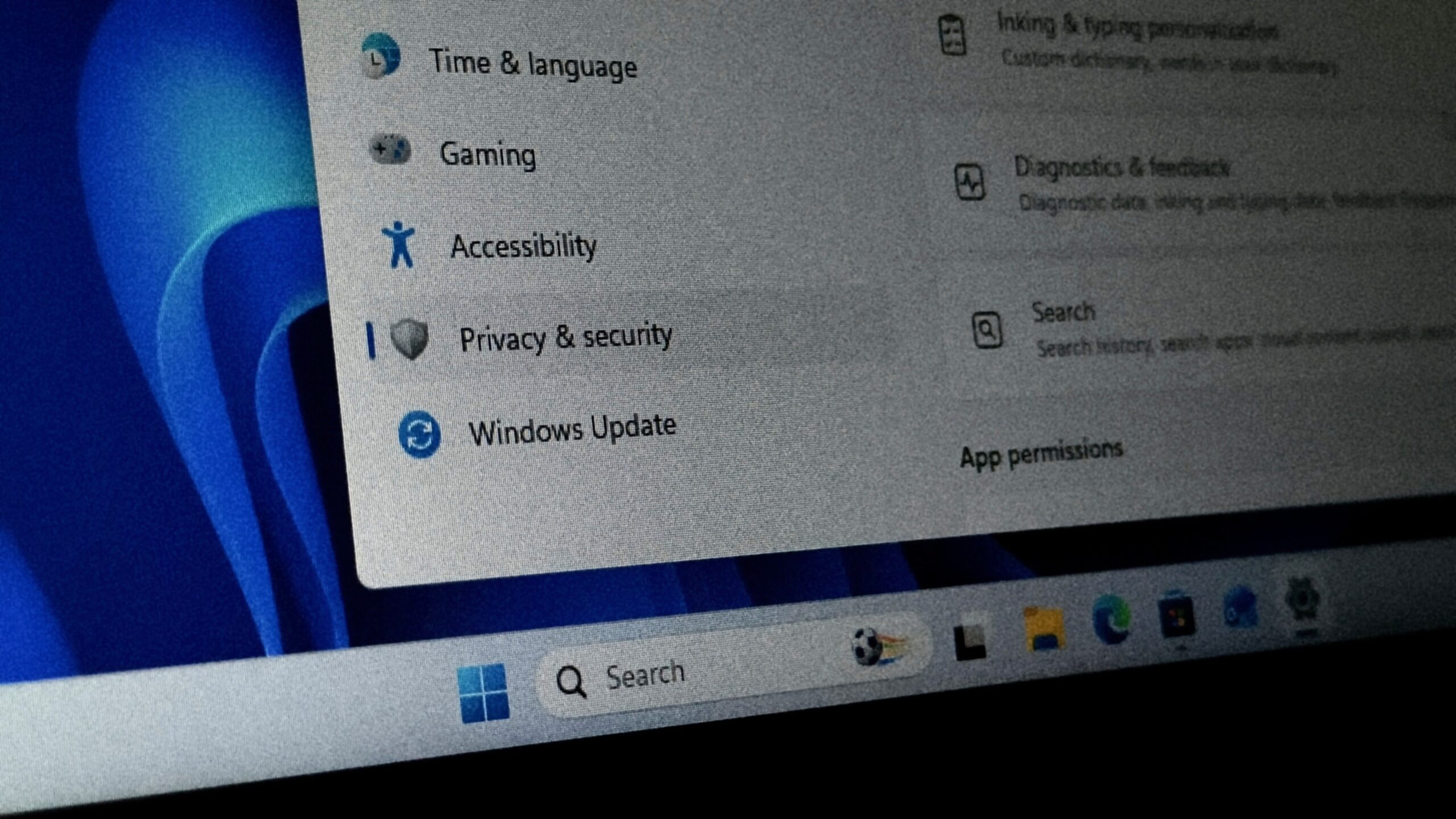
There’s a very easy trick to defeat this: use Linux.
No you don’t understand… I’ve spent the last 30 years investing in increasingly awful software companies to create “industry standards” and leaving these companies behind would require me to change and learn!!!
Even worse!
Admitting that I was not always doing the most sensible thing, at all times! That I was actually doing really stupid things, for a long time!
I … I can’t make mistakes… no … reality is wrong!
Realizing you’re making mistakes and continuing anyway is the problem.
Yes, I’m trying to be hyperbolically facetious, to illustrate that.
So many issues with the world boils down to that last part, people refusing to change and learn. I never understood it, I’ve always loved change and learning. I’ve seen so many people go from having that same openness to only caring about keeping everything the same and never learning, it’s really disturbing. Some are like that from a very early age, others fall into it at any other part of their lives and it’s never a good thing IMO.
For me, I’ve got a million interests. I could change and learn this one thing, but that would take time away from learning about other, more personally interesting things.
I talked with the women i’m working with where we print our price lists about changing from adobe to something else and she told me it would be a bad idea since it would make both of our work much more buggy and time consuming with more chances of the end result being worse. So i’ll keep using indesing and the adobe suite for now but i did switch from sketchup to blender for 3D modeling and it’s a bit challenging and more messy then i’m used to but i get better rendering results from what i tried so far.
At some point you just have to leave the software behind. That time is now!
If your system uses systemd, it has an etc/machine-id, which is used for a lot of different things. And changing it will break a lot of stuff, probably until you reboot. I guess you could write something to randomly shuffle it every time you reboot? But it is the go-to way for lots of programs (including browsers) to identify themselves. Which means (unless you have done the work to scramble your machine ID) you can be tracked on Linux as well.
The difference is that Linux isn’t sending telemetry to some central entity associating that ID to an IP.
This article is super vague about this as well. How does Microsoft not only have the GDID->IP link, but they have Web history as well? Are they just exposing all this through advertising telemetry?
Fucking gross. And if you know of anything on Linux exposing/transmitting the machine-id, please do let everyone know because nothing should. Anything that does should be considered malware.
My interpretation was that they had an IP that they suspected was the perp’s home network, and subpoena’d some major platforms to confirm beyond a shadow of a doubt. Given the perp’s sloppiness in using the same machine for both personal and illicit computing activities, they could even have some network traffic in the capture to indicate which platforms they should subpoena
Or if we want to be more conspiracy-minded, maybe they installed a trojan on his computer and this is the parallel evidence trail that law enforcement created so they don’t have to admit to hacking the hackers
i think i remember hearing the dbus machine-id being read by google chrome on linux. it could be used for privacy violation with proprietary software, though i personally consider linux machines with chrome or equivalent software installed compromised.
It’s not just Windows tracking your web browsing history. GPU drivers do it too. Source: https://www.neowin.net/news/intel-windows-driver-to-now-collect-user-telemetry-data-like-website-categories-by-default/
…on Windows. if you explicitly install their malware and agree to data sharing.
I should have clarified, but yes it’s the windows GPU drivers. Though even on Linux, it’s hard to know what the proprietary GPU drivers do, but from what I read they don’t collect telemetry by default. Luckily Nvidia is developing official open source drivers now so we won’t have to worry about these things.
Also note that on Windows, it’s fairly annoying to disable all telemetry. It’s not just an option in the installer. You have to use unofficial third party tools.
That’s wild. Shit like this makes me distrust proprietary drivers
I distrust proprietary anything at this point
also there’s the TPM chip.
Upvoting both comments for awareness, since Linux is the first of a multi-step process, not a privacy panacea.
But we must be clear that in both theory and practice there’s little comparison between systemd and modern Windows machine-user association.
Someone using Windows regularly has a gaping wound, is actively bleeding out. Switching to Linux is just a tourniquet, but every other treatment is at best no-effect until that tourniquet is applied.
E: transpose
systemd/Windows for clarityAlso as a life long programmer, I have this feeling it is possible to just go in and make some changes so I can have the system just make shit up about the TPM while indeed also doing the equivalent of having system-d decide to respond with random bullshit.
Don’t even need to be a programmer, just find a community of them that you trust that distribute their own “fixes”.
Definitely not doing that with anything else because its both hidden in compilation and buried like herpes across multiple components. Probably/hopefully not directly related but I really want to know what they changed to break the clipboard service.
And you’d be technically correct, the best kind of correct.
To the inquisitor:
any distro that’s fully OSS can be fully compiled from scratch with any modifications you choose).
Though yes, if you’re still using Windows, the learning curve may look like a wall.
Guessing the X11 [X]Wayland migration KDE Plasma bug report? Should be fixed in 6.5.2.
Adjacent comment. I’ve found working in a true posix environment is drastically better than the oddities I dealt with Win32. One annoyance is Microsoft has never been able to implement
fork().Though i never messed with x11 as I was never motivated to see what it was like under the figurative hood.
It really is a hell of a lot more sane, instantly missed once you don’t have it. And yeah Fork’s a blessing when used with care lol
Sorry, switched contexts there. Microsoft broke their clipboard service recently which makes me think they added “telemetry” collecting logic somewhere in there.
Oh right, I misread. And yeah not sure (my win32 repro targets have all been locked for a while) but with all the facepalm regressions I’ve read about lately it really could be anything.
From my experience, the number one culprit of legacy code breaking is someone asking if anyone knows how it works. Second most common culprit is someone making a “quick patch” to legacy code.
Yeah, motherboard-level tracking is scary because even the OS won’t be able to detect it. The truly paranoid people (and security researchers) go as far as desoldering chips to ensure nothing phones home.
Where in the source does Firefox expose machine-id to websites?
With a quick grep I’m only seeing it around audio?
If that hacker only knew about tracking by Windows…
I wouldn’t call overhauling your entire operating system, including finding alternatives to software you use daily, making sure your hardware is compatible and relearning your entire work method as an “easy trick”.
In any other context I’d agree with you, but hacking is the one context where you really do want to do things the hard way. Use ephemeral VMs with passwords only saved in your head, have a dedicated machine for your illegal activities to help isolate your real identity from your hacking.
Honestly even if you’re just doing HackTheBox and similar best practice is to spin up a Kali VM and only use that VM for the activity since you’re literally connecting to a network with a bunch of hackers, even though what you’re doing is entirely above the board
I think you might actually be surprised…