
 its interesting that a field which avoided goedel like a plague will have to embrace it, if everything is inductive logic and true/false/meaningless statements, it follows that computer can chain a way such arcs in formalized language for the axioms/types presented to it.
its interesting that a field which avoided goedel like a plague will have to embrace it
This makes no sense to me, what did avoiding incompleteness look like and what will embracing it look like?
if some statement continues to elude math/ai proofers, is it because it’s unprovable in general (being nonsensical statement), or have they not found a way? can you deliberately construct a hypothesis which is unsolvable but have an application?
Gödel’s theorems are somewhat limited in scope because they only apply in specific logical frameworks (first-order logic was what Gödel was working in), but it’s been over a decade so I don’t want to state specifics that I might be remembering wrong. What I’m saying here will obviously be false for mathematical logics where incompleteness does not apply. (The examples I’ve seen of these were very uninteresting, but I’m not knowledgeable about what else is out there.)
Statements which can neither be proven true nor false can trivially always be made provable in an expanded axiomatic framework - if statement phi can’t be evaluated under axiom system A, that won’t stop it from being trivially provable by tautology in axiom system A+phi. Phi is independent of A.
We have plenty of examples like this now. The continuum hypothesis is independent of ZFC in first-order logic. This was shown by working outside the logical framework ZFC lives in to prove both ZFC+CH and ZFC+~CH are consistent. If neither of those have a contradiction, then CH is neither true nor false in ZFC.
Gödel’s first incompleteness theorem showed that you there are statements in number theory (here meaning the Peano axioms under first-order logic) that are definitively true but cannot be proven true with first-order logic. He invented a technique now called Gõdel numbering which, by working outside first-order logic associates numbers with well-formed formulas, and used some clever self-referntial tricks to show that there exists a true statement about numbers which if provable in first-order logic would immediately imply the statement “I am not provable” is also true. I don’t remember if this proof was constructive and you can write down the statement if you leave enough room for digits.
Gödel’s second incompleteness theorem says you can’t prove axiomatic consistency without moving to a higher logical framework that your current logic exists inside, first-order logic inside second-order logic for example. So if you move-up to second-order you can conclude that number theory statement is true and conclude the Peano axioms are consistent within first-order logic, but you can’t say that there are no contradictions in your second-order axiom set without moving higher still.
These theorems were a huge deal a century ago because there was a dream (Hilbert’s program) to formalize mathematics, and the realization that any specific formalization would not be provably consistent made people stop caring. Whichever system you pick, it will always be possible that it was entirely contradictory from day one without ever knowing. That’s why formalization more or less died with incompleteness until it had a different purpose to serve. Mathematicians went back to colloquial assumptions and being imprecise about axioms and logical frameworks unless they’re critical to the result. There doesn’t have to be one “correct” backbone for math, but there’s a backbone we’ll all assume so that we’re speaking the same language.
Every single one of these pro AI articles is just an Ad and they are getting progressively more desperate as time runs out for the industry slowly but surely. That is all that needs to be said about this.
The quote from the article affirming it is true:
Honestly the chance that anything is fishy here is approximately zero.
The odds of RH being false have been approximately zero for an eternity now!!! The whole point of a mathematical proof is that “approximately zero” is not irrefutable evidence! This is worse than worthless, it tells us nothing that wasn’t understood before, and gives a headline that allows people with no experience with what mathematics actually is to declare mathematicians obsolete, gives administrations justification to cut funding.
The fruits of mathematics have never been in knowing whether a specific statement is true or false, the fruits have been what’s fallen out of the creativity used in solving these very hard problems. The concept of a scheme, now the backbone of modern algebraic geometry and a critical concept for modern cryptography, is something that Grothendieck developed in solving the Weil conjectures. This concept is a million times more important than knowing that the Weil conjectures are true. If we had had a machine say “the chance of the Weil conjectures being false is approximately zero” and mathematicians felt discouraged from pursuing their own investigation, then we’d have lost out on the actual world-changing discovery that came out of solving the problem. The creativity that’s come in the process of proving hard results has invariably been the lasting impact of almost all research problems. People who can’t define uniform convergence will use purported “proofs” like this to kill the actual purpose of mathematics research.
I’m unhappy it’s by disability but I do feel some relief in being out of academia right now.
Thanks for reading this slop article. I’m glad to save the time.

As someone who is productivity obsessed, I would say don’t worry about any negative impacts that your disability may have on your productivity.
Looking at things, western academia really isn’t getting anything done right now.
It’s not saying the odds of the RH being incorrect is almost 0, it’s saying the odds that the LEAN code was intentionally written to give a false positive are basically 0.
it’s saying the odds that the LEAN code was intentionally written to give a false positive are basically 0
intentionality is not the issue here, dude

The issue is rather that the Lean Prover itself has had many soundness bugs, including some accidentally exploited by AI-generated proofs, and the odds that it does not have more are basically zero.
here are some links
- https://mathoverflow.net/questions/513540/should-we-trust-ai-generated-formal-proofs-in-lean-4 (July 2026)
- https://siddhartha-gadgil.github.io/automating-mathematics/posts/lean-kernel-bugs-and-junk-values/ (August)
- https://terrytao.wordpress.com/2026/10/09/what-mathematicians-should-know-about-the-lean-theorem-proverquestions-of-reliability-and-ai/ (October)
see also the list of soundness bugs on djb’s False computer-checked proofs page.
Thanks, those links are great! Especially the text by Hales.
I do not believe that mathematicians can be entirely satisfied with a system that claims to be a type theory but that cannot even promise that well-formed terms have a unique type, up to definitional equality.
This seems like a bit of an oversight. Also seems they missed an error in the foundational lean 3 thesis and when they found it, everybody was already speeding along on the lean train. Now lean 4 doesn’t have a similar foundation. Had the error been found immediately after publishing the thesis in 2019, it might not have picked up as much steam. Also, even if unique typing is ever proven, definitional equality will still be undecidable.
Instead of saying:“Lean is based on type theory”, we should say:“lean looks a bit like type theory, but who knows?”
Oh, I missed that phrasing when replying myself, good catch.
First, watch your tone. Second, I clearly meant that some technique was exploited by the AI generated code to give a false positive. Intentional or accidental both literally mean nothing when talking about something a machine generated.
watch your tone.
Sorry, i didn’t really intend to invoke the tone of that scene per se, but somehow felt compelled to reference the line when disagreeing with your statement about what the independent mathematicians’ statement is saying.
Obviously, but I feel comfortable conflating them because I don’t see a reason to find that distinction important in response to an article titled “The AI Riemann hypothesis proof is true, independent mathematicians confirm”.
One is human error that can be corrected, one is a fundamental fact of the universe.
could you not just point out, much more simply, that this is like a great math guy with a real good calculator? knowledge has not been advanced, a math guy just used a calculator to confirm what he already knew
the novelty is that the calculator printed a ton of pages
No, because the accuracy of the calculator is the question mark in its validity, and because a casually dismissive summary like that completely downplays how legitimately harmful these headlines are to mathematics as a whole. Someone with no mathematics background reading the phrase “knowledge has not been advanced” will likely not find it self-evident without further explanation.
[redacted now-removed part of parent comment]
fyi Levent Alpöge (who you’re talking about here) has these papers on arxiv.
re: the recent effects of LLMs on mathematics, i recommend this post (a collection of reactions from mathematicians about OpenAI’s October 6 publications).
Okay, I’m really embarrassed here, I spelled his first name wrong when searching. Editing that out and if you could just delete your comment so there’s no evidence I’d really appreciate it.
I’m comfortable calling anyone with a PhD in maths from MIT a great math guy
Thank you for the explanation, but I was just concerned about talking to laymen.
The zero papers part is particularly damning, of course, butI do think someone with no mathematics background would read an actual explanation and fail to apprehend it. Not because they are AI fans, but because people tend to make good faith assumptions about fields they have no expertise in. They assume an universe of knowledge they have no access to, and might also assume that, hey, even with your explanation maybe this AI computer thing did something minimally useful regardless.Edit: but hey if i am talking out of my ass then i dont wanna frustrate you, you can just ignore this
The zero papers part is particularly damning
note: the comment you’re replying to was mistaken and has since been edited
thanks for the headsup
The Millennium Prize for it can only be claimed two years after it has been published in a peer-reviewed journal, and it isn’t clear if/when that is going to happen. Alpöge said he is publishing only Lean code for now because it would be "obviously inappropriate to attempt to post some massive unreadable travesty of ‘slop’" - Claude produced a 250,000 page book on the subject when he asked it to. The Lean code he is publishing, meanwhile, is 17 million lines. 🫠
if you’re gonna use the slop travesty generator you’re not allowed to feel shame about using the slop travesty generator
A blog post from ~7 months ago. Emphasis mine.
The fall of the theorem economy. How AI could destroy mathematics and barely touch it
If AI ever “wins” at mathematics, then someone else will have to be the “loser,” and the only other player in the room is human thought. Who cares if mathematics isn’t an adversarial game—and we are still figuring out the rules. When the news is this sensational, it becomes fit to print.
Here is what the nuclear scenario looks like. A year from now, an AI lab assembles a secret A-team, throws a few billion dollars of compute at the Riemann hypothesis, and comes up with a 2,000,000-line Lean proof. What are mathematicians going to say? That the proof is unintelligible? Right, but who cares? Isn’t the whole of math already unintelligible to most people?
That the theorem was still proven by the humans in the loop? Yes and no—and in that specific case I would probably vote no. That a few billion dollars represents decades of the entire mathematical sciences budget at the National Science Foundation? Correct, so what? And what if the conjecture happens to be much easier, accessible with only nominal resources?
That the conjecture itself was still produced by a human brain, along with the entire mathematical stack underneath, starting from the very language in which the conjecture was written, the concepts of infinite sums, complex numbers, meromorphic functions and analytic continuation, the interpretation of the conjecture as a profound statement about the distribution of prime numbers, and the prophecy that it should be true? And that, at this point, humans are the only beings who care about it?
This objection is profound and valid. But when you look like a sore loser, nobody cares what you say. I don’t expect this exact scenario to unfold. But I do expect to see, in the near future, one or more claims that AI has “solved math”, or “achieved mathematical supremacy.” And, given the current state of the conversation, I expect the actual evidence supporting these claims to be framed and/or understood as a defeat for human intelligence.
That a few billion dollars represents decades of the entire mathematical sciences budget at the National Science Foundation? Correct, so what?
I get that they’re saying “so what” as in “what does that mean for public perception”. But this is a serious point I constantly bring up that never gets mentioned.
Precisely what is the point of AI solving mathematical problems if it costs more than just training and hiring mathematicians who would also get like 1000 other things done with the same budget?
I mean it’s debatable whether a bunch of mathematicians could’ve solved the Riemann hypothesis, considering we’ve been trying for 150 years. It seems unlikely that a human is to ever write a 17 million line lean proof, which means that either the proof is intrinsically difficult or we are decades of general mathematical abstraction away from seeing a human proof
I would argue only an AI would come up with such an absurdly inflated proof.
And I am suspicious that the absurdly inflated proof is a result of brute-forcing the LEAN framework until you get something that might just represent an edge case in LEAN and not an actual solution.
But since it is imparsable to human beings, no one can actually verify if this is a flaw in the LEAN or a real usable solution.
Is it that debatable? We know a human was literally in the process of verifying a solution that’s at least 300x shorter (but possibly closer to 10,000x). While the money spent on AI brute-forcing this is like a 100x the national mathematics budget.
I would argue the 17 million line lean proof (if indeed it is correct) is moreso evidence that AI is overly verbose and useless for us in terms of gaining a useful understanding, rather than evidence that the the solution is necessarily ludicrously long or a lot of abstraction away.
Even assuming the proof is true, there’s zero evidence so far to indicate it has to be that long or solved by machine, and indeed already significant evidence to suggest it’s human-solvable and that this proof is at minimum >20000% longer than needed.
Obviously that efficiency will improve. We don’t know at what rate, but if for example the conciseness improvement was about the rate of Moore’s law, then AI might be as useful as actual mathematicians in about 80 years. Now that I could believe.
Damn that’s some prescient shit
yeah but can the AI tell you how many 'n’s are in the word riemann
I shit you not, first try:

Maybe the AI is far sighted and mistoke the “m” for an “n”.
have it write code to count a character in a string and it’ll probably work. or don’t because the whole exercise is a frivolous waste
import sys from collections import Counter def count(word: str, letter: str) -> int: if letter not in word: return 0 return Counter(word)[letter] if __name__ == '__main__': print(count(*sys.argv[1:3])I’m pretty sure that the models which are counting correctly now are doing something along those lines.
Calculation stuff too.
Me wasting a kilowatt-hour, 2 cents, and a cupful of water instead of typing
"riemann".count('n')
All this AI stuff must suck for mathematicians as much as it does software developers, artists, and writers.
Might be even worse for them. I never made any art that became a fundamental part of human knowledge that would shape humanity’s future, I imagine it would feel like a doctor being told all cures for diseases in the future will just be vibes based woo and no more research will ever need to be done as a result. Like, this stuff spells a grim future for artists where we can’t find work and everyone just consumes the slop, but that’s basically where we were at already.
But for mathematics, this is putting a cap on the extent of human knowledge, just arbitrarily deciding “we won’t learn any more than this.” knowing that there won’t be a future of mathematicians trying to discover the fundamental nature of the universe, just “vibe maths” where the AI produces nothing of value to humanity, just ego stroking for the people who want to “solve” the field but don’t care about actually learning anything.
i went to school for programming, if i hadn’t already crashed out of the industry because it’s intolerable this would certainly have done it. boggles the mind how people can find any sort of fulfillment in being so-called ‘prompt engineers’. truly soul sucking
I need to switch to something desperately…
I feel like, in my experience (and this could be bc my area is convex optimization/analysis which also pulls on CS), AI usage is generally viewed with a lot of nuance and varied opinions. It’s been weird bc artists/creatives as a professional class have wholly rejected it. Mind you, I’m against AI too; I got into math to solve cool and interesting problems and to practice my deductive reasoning muscle in a way no other discipline can allow. AI could technically make me a more “productive” mathematician by the benchmarks of papers/research output but it would make me a less skilled one as well.
It’s been weird bc artists/creatives as a professional class have wholly rejected it.
It has been framed this entire time as the tool that will “replace” artists. Not as a useful tool to help our workflow, but the thing that makes us obsolete. Any spaces that allow it have basically become impossible to work in as an artist since the AI art completely drowns out anything else. It’s a pretty clear sign why people despise it. It brings nothing of value to our field and seeks to destroy it. It’s less about the technology specifically, and more about how it has been used within our capitalist society.
Yeah I feel like a lot of the problems with AI are just problems with technological leaps under capitalism more generally. Not to say that that isn’t an issue in and of itself or to be dismissive ofc, but that the anti-AI movement in its current iteration (as I’ve personally seen it) is largely not class conscious and doesn’t make this connection. Maybe this is why I’m AI-pessimistic/-averse as opposed to a full-blown hater, because I see its potential for moving humanity forward while also acknowledging that it’s hurting us now.
Just having the lean doesn’t prove it within a shadow of a doubt
Love when Philosophy comes in like a wrecking ball.
I have seen it said for other mathematics proofs that the AI just followed a given technique for much farther than any human had, in which case the machine is doing exactly what a machine should do: making long, exhausting labors faster and easier. I wonder if it is the same situation here or not.
penrose was wrong
clanker solved this, people checked that, anthropic ipo hype scam etc, i think we’re missing the real point here and that is what the fuck they’re talking about is that made-up type math

grains of utter derangement from incurable poindexters. how does “proving” this madness help the wheat harvest. how is it helping us meet the steel quota.
can this math isolate the hitler particle?
They could claim it would help us find a cure for fascism and I’d still be unimpressed.
We already have a cure.

Maybe this math was the hitler particle the whole time.
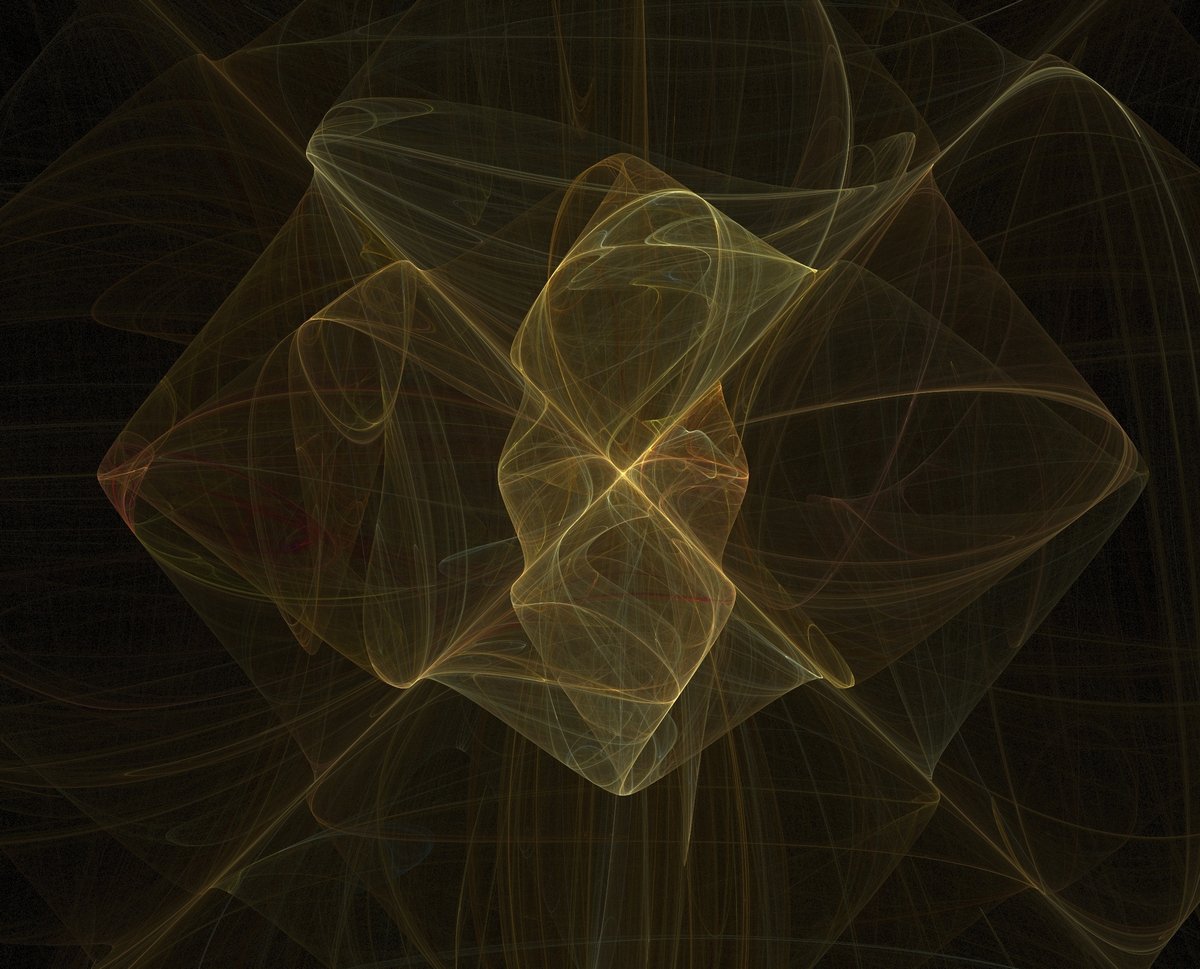
The thumb gave me a pang of nostalgia. It’s almost certainly a fractal made with the Chaoscope app. I used to use it. It was amazing. It’s a strange attractor fractal program that creates 3D wireframe fractals on the fly. Rending took ages of course. The program was abandoned in 2010. I stopped using it sometime after because it was an obscure program, there were no 3rd party goodies, and as cool as the fractals were the textures were very limited.
Ninja edit. play.google.com has it but it must be a limited toy. You can’t do much on a phone. And the app’s website no longer exists.